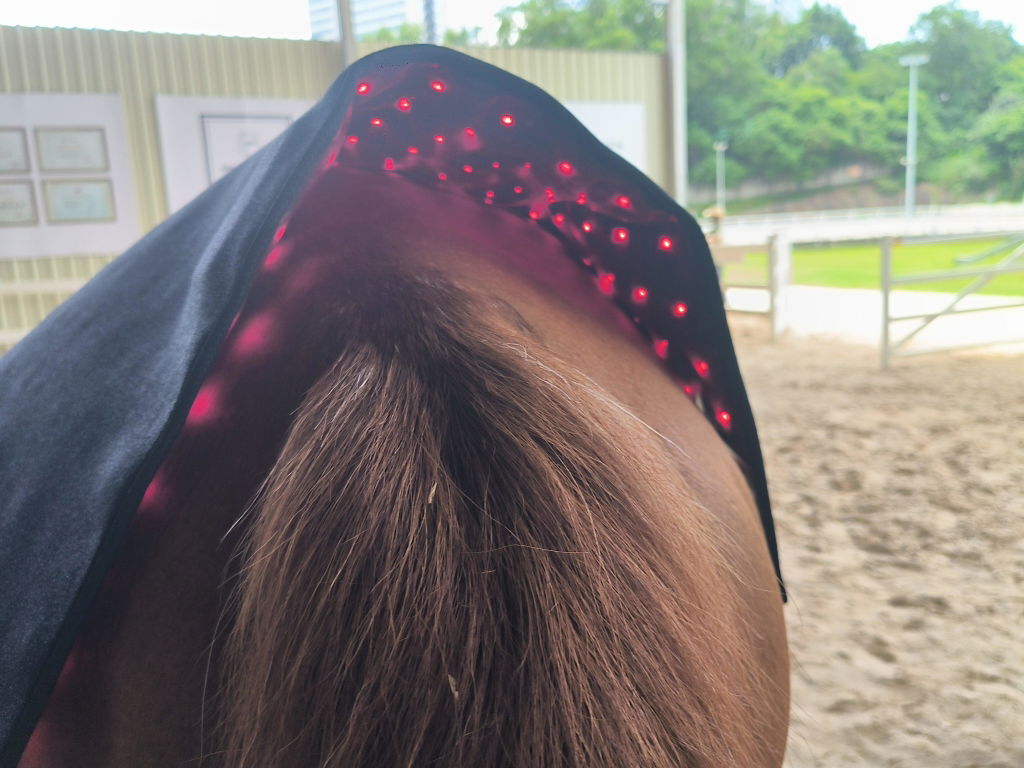
What is the Best Red Light Therapy for Horses in 2026?
If you're searching for the best red light therapy for horses in 2026, you've probably discovered there's no shortage of options — handheld torches, wraps, pads, full-body blankets, and devices at every price point from $300 to over $1,500. The honest truth is that there is no single "best" device that's right for every horse and every owner. The best red light therapy for your situation depends on what you're treating, how you plan to use it, and your budget.
That said, the best devices in 2026 all share certain proven characteristics, and understanding these helps you cut through marketing claims to identify what genuinely matters. This guide explains what makes red light therapy effective for horses, the key criteria that separate quality devices from gimmicks, and how to match the right device to your specific needs — so you can confidently choose the best red light therapy for your horse rather than just the most heavily advertised one.
We'll cover the science fundamentals that define quality, the practical criteria for evaluation, how the best choice changes based on different needs, and a clear framework for making your decision. By the end, you'll know exactly what to look for and how to choose well.

What Makes Red Light Therapy Effective for Horses
Before you can identify the best red light therapy, you need to understand what actually makes it work. Red light therapy — also called photobiomodulation — uses specific wavelengths of light to stimulate cellular healing. The light is absorbed by mitochondria in the cells, boosting energy production, reducing inflammation, increasing blood flow, and accelerating tissue repair. These effects support healing across joints, muscles, tendons, and wounds.
The effectiveness of any device comes down to a few core scientific factors, not marketing language. The single most important factor is the wavelengths the device emits. The best red light therapy devices for horses combine 660nm red light, which is optimal for surface tissues, with 850nm near-infrared light, which penetrates deeper to reach joints, muscles, and tendons. A device offering only one wavelength has limited applications, so dual-wavelength capability is the first thing to confirm.
The second factor is adequate power output. The device must deliver enough light energy to penetrate equine tissue and produce a therapeutic effect. Underpowered devices — particularly cheap consumer products — may emit the right wavelengths but lack the power to deliver effective doses to deeper structures. The third factor is treatment area: a device must cover enough of the target area to treat it efficiently, which is why human-sized devices are often impractical for large equine muscle groups.
The bottom line on effectiveness: The best red light therapy for horses delivers dual wavelengths (660nm + 850nm), adequate power for tissue penetration, and a treatment area matched to your needs. Any device meeting these fundamentals can be effective — the differences between quality devices come down to format, durability, convenience, and value rather than dramatic effectiveness gaps.
What the Best Devices Actually Treat
Part of identifying the best red light therapy for horses is understanding the range of conditions it can address — because the best device for you depends on which of these applications matters most. Quality red light therapy supports a wide range of equine conditions, and knowing the breadth helps clarify your priorities.
The most common applications include joint conditions such as arthritis, hock problems, and fetlock issues, where red light reduces inflammation and supports cartilage health. Muscle recovery is another major use — performance horses benefit from accelerated recovery after training and competition, reducing soreness and supporting consistency. Soft tissue injuries including tendon and ligament damage respond to red light's support of collagen synthesis and cellular repair, though these serious injuries require veterinary guidance alongside therapy.
Other applications include wound healing, where red light therapy has documented acceleration of tissue repair; chronic pain management for older horses with degenerative conditions; and general performance maintenance for athletic horses where preventative treatment supports career longevity. The best device for you is one that effectively addresses whichever of these applications represents your primary need — which is why understanding your own priorities matters as much as the device specifications. You can see the range of devices designed for these applications in the PbmEquine horse collection.
The Key Criteria for Choosing the Best Device
With the science fundamentals understood, here are the practical criteria that separate the best red light therapy devices from the rest. Evaluating any device against these criteria gives you an objective basis for comparison beyond marketing claims.
1. Dual Wavelengths (660nm + 850nm)
Confirm the device emits both red (660nm) and near-infrared (850nm) light. This is non-negotiable for comprehensive treatment — single-wavelength devices limit what conditions you can address effectively.
2. Adequate Power Output
The device must deliver enough energy to penetrate tissue. Be wary of very cheap devices that may emit correct wavelengths but lack the power for effective treatment of deeper joints and muscles.
3. Appropriate Treatment Area & Format
Match the device size and format to your needs. Larger treatment areas suit big muscle groups; targeted devices suit specific joints. The format — handheld, wrap, pad, or blanket — should fit how you'll actually use it.
4. Durability & Construction
Barn environments are tough. The best devices feature quality construction that withstands dust, impact, and daily use. Cheap devices that fail after a few months cost more in the long run.
5. Warranty & Support
Look for at least a 12-month warranty and accessible customer support. Reliable warranty coverage signals manufacturer confidence and protects your investment.
Beyond these five core criteria, additional features can add value: automatic timers simplify treatment consistency, EMF-free certification matters for sensitive animals and long-duration use, and cordless rechargeable designs improve safety and convenience around moving horses. PbmEquine devices, for example, are EMF-free certified and backed by a 12-month warranty — meeting the durability and support criteria that quality requires. You can explore devices meeting these standards in the red light therapy for horses collection.
Why the "Best" Device Depends on Your Needs
Here's the key insight that most "best device" articles miss: the best red light therapy for horses genuinely differs depending on what you need it for. A device that's perfect for one owner is wrong for another. Understanding which scenario matches your situation is more useful than any single ranking.
Best for Targeted Joint Treatment
If your primary need is treating a specific joint condition — hock arthritis, fetlock issues, knee problems — the best choice is a wrap or pad that conforms around the affected joint for hands-free, even coverage. The wrap format maintains consistent contact and treats the complex joint structure better than a handheld device. For owners managing chronic joint conditions requiring daily treatment, this format makes consistent treatment practical and sustainable.
Best for Muscle Recovery & Performance
If you're focused on performance horse recovery — treating large muscle groups after training and competition — the best choice is a device with a larger treatment area, such as a sizable pad or full-body blanket. These cover the big muscle groups (hindquarters, back, shoulders) efficiently. Performance horse owners treating multiple muscle groups daily benefit from the time savings of larger coverage areas. Our guide on equine red light therapy devices covers the range of formats suited to performance recovery.
Best for Versatility & Value
If you want one device that handles many situations — different joints, occasional muscle work, wound treatment, even cross-species use on a dog — the best choice is a quality handheld torch or a flexible wrap. These versatile formats treat the widest range of conditions, offering the best value for owners who don't have one single dominant treatment need. The trade-off is that handheld devices require holding throughout the session, while flexible wraps balance versatility with hands-free convenience.
Best for Budget-Conscious Owners
If budget is your primary constraint, the best choice is an entry-level handheld device from a reputable maker — prioritizing the proven dual-wavelength fundamentals over premium features. A quality $300-$400 device with the right wavelengths, used consistently, delivers real results. Avoid the temptation of very cheap devices that compromise on wavelengths or power, as these waste money by being ineffective. Spending moderately on proven fundamentals beats both overspending on premium features and underspending on ineffective bargains.
The key takeaway: The best red light therapy for horses is the one whose format and specifications match your specific primary need — targeted joint treatment, muscle recovery, versatility, or budget value. Identify your dominant use case first, then choose the device that serves it best.
Matching the Decision to Your Horse's Life Stage
Beyond your treatment goal, your horse's life stage also shapes what the best red light therapy looks like. A young performance horse in heavy training has different needs than a semi-retired senior or a recovering patient.
For young and prime performance horses, the best device emphasizes muscle recovery and preventative maintenance — favoring larger treatment areas that efficiently cover the muscle groups worked hardest in training. For senior horses, the best device emphasizes joint comfort and ease of daily use, since older horses commonly develop arthritis in multiple joints and benefit from gentle, consistent treatment that's quick to apply. For horses in active recovery from injury, the best device is one matched to the specific injured structure, used as part of a veterinary-guided rehabilitation program.
This life-stage perspective reinforces the central point: the best red light therapy isn't a fixed product but a match between device characteristics and your horse's actual circumstances. A thoughtful owner who considers their horse's age, workload, and specific conditions will choose far better than one who simply buys the highest-rated or most expensive option.
Common Mistakes When Choosing Red Light Therapy
Understanding the common mistakes owners make helps you avoid them and choose the best device with confidence.
- Choosing on price alone. The cheapest device often lacks adequate wavelengths or power, while the most expensive isn't always the best fit. Focus on matching specifications to your needs.
- Ignoring wavelengths. Many buyers overlook the most important specification. Always confirm dual 660nm + 850nm wavelengths before purchasing.
- Buying the wrong format. A full blanket is overkill for treating one hock; a small handheld is impractical for whole-body muscle recovery. Match format to your use.
- Expecting instant results. Red light therapy works through cumulative cellular healing over weeks. The best device used inconsistently underperforms a basic device used daily.
- Overlooking durability and warranty. A cheap device that fails in months costs more than a quality device with a solid warranty. Factor long-term value into your decision.
Avoiding these mistakes comes down to one principle: prioritize proven fundamentals (wavelengths, power, appropriate format, durability) matched to your real needs, rather than being swayed by price extremes or marketing claims. For owners wanting to verify a device meets the right standards, the specifications listed in the PbmEquine equine collection illustrate what quality dual-wavelength devices should offer.
Getting the Best Results from Your Chosen Device
Choosing the best red light therapy device is only half the equation — getting the best results depends on how you use it. Even the highest-quality device underperforms if used inconsistently or incorrectly. Once you've chosen a device matched to your needs, these principles ensure you actually realize its benefits.
Consistency is the single biggest factor in results. Red light therapy works through cumulative cellular healing that builds over weeks. The best approach follows a phased protocol: daily treatment during an initial intensive phase of 2-3 weeks, then 5-6 sessions weekly for an active treatment phase of 8-10 weeks, then 3-4 sessions weekly for ongoing maintenance. Most horses show measurable improvement by week 4-6 of consistent treatment — so patience and routine matter more than any single premium feature.
Proper application maximizes effectiveness. Clean the treatment area first so light penetrates effectively, position the device correctly over the target tissue, maintain consistent contact throughout the session, and use the recommended duration for the area being treated. A device with an automatic timer simplifies this considerably, removing guesswork and ensuring consistent dosing each session.
Integration with overall care produces the best outcomes. Red light therapy is a supportive treatment that works best alongside proper veterinary care, appropriate exercise, quality nutrition, and other treatments as indicated. It complements rather than replaces these fundamentals. For diagnosed conditions, coordinate your red light therapy use with your veterinarian's guidance — this ensures the therapy supports rather than conflicts with the overall treatment plan, and produces the best results for your horse's specific situation.
The owners who get the best results aren't necessarily those with the most expensive devices — they're those who chose a quality device matched to their needs and committed to using it consistently and correctly as part of comprehensive horse care.
Conclusion: How to Choose the Best Red Light Therapy for Your Horse
So, what is the best red light therapy for horses in 2026? The honest, useful answer is that the best device is the one whose proven fundamentals and format match your specific needs. There is no universal "best" — but there is a best choice for your situation.
Start with the non-negotiable fundamentals: dual wavelengths (660nm + 850nm), adequate power, and reliable durability with warranty support. Any device meeting these can be effective. Then identify your primary need — targeted joint treatment, muscle recovery and performance, versatility across many uses, or budget value — and choose the format that serves it best. A wrap or pad for joints, a larger pad or blanket for muscles, a versatile handheld or flexible wrap for varied use, or a quality entry-level device for tight budgets.
Most importantly, remember that the best red light therapy is the one you'll actually use consistently. Cellular healing accumulates over weeks of regular treatment, so a device matched to your routine that you use daily will always outperform a more expensive device that sits unused. Choose proven fundamentals, match the format to your needs, and commit to consistent use — that's how you get the best results for your horse in 2026 and beyond.
Frequently Asked Questions
What is the best red light therapy for horses in 2026?
There is no single "best" device for every horse — the best choice depends on your specific treatment needs, budget, and how you plan to use it. However, the best devices share key characteristics: dual wavelengths combining 660nm red and 850nm near-infrared, adequate power output, an appropriate treatment area, durable construction, and reliable warranty support. The best red light therapy combines these proven specifications with a format matched to your primary goal — targeted joint treatment, muscle recovery, or whole-body support.
What wavelengths are best for horse red light therapy?
The best devices combine 660nm red light and 850nm near-infrared light. The 660nm red is optimal for surface tissues like skin and wounds, while 850nm near-infrared penetrates deeper to reach joints, muscles, and tendons. Single-wavelength devices have limited applications — dual-wavelength devices address the full range of equine conditions. Confirming both wavelengths is one of the most important checks when choosing the best red light therapy.
How much should I spend on red light therapy for my horse?
Devices range from around $300 for quality handheld units to $1,500+ for comprehensive systems and full-body blankets. Handheld devices ($300-$600) suit spot treatment; wraps and pads ($400-$1,000) suit targeted joint treatment; full blankets ($1,000-$1,500+) suit whole-body coverage. Spending more doesn't always mean better results — a quality dual-wavelength device used consistently beats an expensive device used occasionally. The best red light therapy is one matched to your real needs that you'll use regularly.
Is a more expensive device always better for horses?
No. What matters most is matching specifications and format to your actual needs. A $400 wrap that fits your horse's hock and gets used daily produces better results than a $1,500 blanket that's cumbersome and used occasionally. The best red light therapy delivers proven wavelengths, adequate power, appropriate treatment area, and reliable construction at a price fitting your budget. Focus on fundamentals rather than price alone.
What format of red light therapy is best for horses?
It depends on your goal. Handheld torches suit spot treatment and varied use but require holding throughout. Wraps and pads suit targeted joint and leg treatment with hands-free convenience. Full blankets suit whole-body treatment for performance horses. For most owners, a versatile wrap or pad offers the best balance of hands-free operation, multi-area capability, and reasonable price. The best format matches whether you need targeted or comprehensive treatment.