Disclaimer: PbmEquine red light therapy devices are designed for general animal wellness and comfort. They are not intended to diagnose, treat, cure, or prevent any disease or medical condition. The information on this page is for educational purposes only and is not a substitute for professional veterinary advice, diagnosis, or treatment. Always consult a licensed veterinarian regarding your animal's specific health needs. Individual results may vary.
About Red Light Therapy
1. What is red light therapy? Why choose red light therapy for animals?
Red light therapy — also known as photobiomodulation (PBM) — is a non-invasive wellness approach that uses specific wavelengths of red and near-infrared (NIR) light to support the body's natural biological processes. These wavelengths are absorbed by cells beneath the skin and may help support cellular energy production.
Red light therapy has been the subject of numerous peer-reviewed studies exploring its potential applications in wellness, recovery, and general comfort — for both humans and animals. Many horse owners, dog owners, and equine professionals have adopted red light therapy as part of their animals' daily care routines.
For animals, red light therapy is commonly used to support general comfort, mobility, muscle recovery, and skin and coat health. It may also help promote relaxation — making it especially suitable for animals experiencing age-related stiffness or recovering from physical activity.
Compared with some conventional approaches, red light therapy offers a gentle, non-invasive, and drug-free option that many owners find easy to integrate into their animal's routine.
2. How does red light therapy work?
All living organisms rely on light as a source of energy. Within each cell are mitochondria — often referred to as the "power plants" of the cell — which play a key role in energy production.
When red and near-infrared light is absorbed by the mitochondria, it may help support the production of adenosine triphosphate (ATP), the body's natural energy molecule. With more available cellular energy, the body may be better equipped to carry out its normal maintenance and recovery processes.
Research suggests that red light wavelengths may support healthy circulation, help the body manage its natural inflammatory response, and contribute to normal tissue maintenance. Many users report observing benefits such as improved comfort, better mobility, and a more relaxed demeanor in their animals after consistent use.
3. What does red light therapy do?
Red light therapy delivers focused wavelengths of light to the skin and underlying tissues, allowing cells to absorb light energy and use it more efficiently. This enhanced cellular energy production may support the body's natural maintenance and recovery processes.
Through its potential effects on circulation and cellular function, red light therapy may help support:
- The body's natural inflammatory response
- Healthy blood flow and oxygen delivery
- Normal tissue maintenance and recovery
- Muscle comfort and relaxation after exercise
- Skin and coat condition
- Rest, recovery, and overall vitality
4. What are the potential benefits of red light therapy?
Red light therapy is used by animal owners and professionals to support a wide range of wellness and recovery goals. Commonly reported areas of use include:
- Joint comfort, flexibility, and ease of movement
- Muscle comfort after exercise, training, or competition
- Soft tissue comfort and recovery support
- Post-activity recovery and relaxation
- General skin and coat health
- Healthy circulation
- Overall comfort and well-being in senior animals
Red light therapy is commonly used for horses, dogs, cats, and other companion animals. Results vary by individual animal, and we always recommend consulting your veterinarian for specific health concerns.
5. Why do animal owners choose red light therapy for dogs, cats, and horses?
Active animals are naturally prone to muscle soreness, joint stiffness, and general wear from daily activity, exercise, or competition. Many pet owners and equine professionals look for non-invasive, drug-free options to support their animals' comfort and recovery as part of a broader care routine.
PbmEquine LED red light therapy devices are designed to deliver red (660 nm) and near-infrared (850 nm) wavelengths that penetrate tissues and may support cellular function. These wavelengths are widely used by veterinarians, animal therapists, and experienced pet owners.
While red light therapy is not a cure-all, it offers a gentle, non-invasive wellness option that many owners use alongside regular veterinary care. Common areas of use include:
- Supporting joint comfort and flexibility
- Promoting muscle comfort and relaxation
- Supporting recovery after exercise or physical activity
- Promoting skin and coat health
- Supporting general comfort in senior animals
- Helping maintain everyday mobility and vitality
In addition, many owners incorporate regular red light therapy sessions as part of a preventive wellness routine, helping maintain comfortable joints, muscles, and connective tissue through consistent support.
For animals with specific health concerns, red light therapy can be used as a complementary wellness support alongside your veterinarian's recommended care plan.
How to Use
6. How often do I need to use red light therapy?
Usage frequency depends on your goals and the specific device being used. For many situations, an initial period of more frequent use is recommended:
- Many users start with daily sessions for the first two weeks
- This is often followed by a maintenance routine of 2–3 sessions per week
For best results, always follow the usage instructions provided with your device. Consistency is key — maintaining a regular routine helps support ongoing comfort and well-being. If you have specific concerns about your animal's health, consult your veterinarian before starting any new wellness routine.
7. Should I continue using red light therapy once I start seeing results?
Yes. When you begin to notice positive changes, this suggests the body's cells are responding well — but continued support helps maintain those results over time. Many users transition to a regular maintenance routine (2–3 sessions per week) to sustain the benefits they've observed.
Think of it like exercise or nutrition — ongoing, consistent use tends to support better long-term outcomes than stopping once initial goals are met.
8. What is pulsing in red light therapy?
Pulsing refers to a rapid on-and-off delivery of light during a session. Some users choose pulsed settings for several reasons:
-
Comfort during longer sessions: Brief off-intervals allow natural cooling, which can improve comfort for the animal during extended use.
-
User preference: Some users prefer pulsed delivery based on their experience and the specific area being addressed.
Pulsing is not required for red light therapy to work effectively. Both continuous and pulsed modes are widely used, and the best choice depends on the application and user preference.
9. Is red light therapy safe to use on sensitive skin?
Red light therapy is generally considered gentle and well-tolerated, including for animals with sensitive skin, as it is non-invasive and does not rely on harsh chemicals or excessive heat.
If your animal has a skin condition or is undergoing any treatment that may increase light sensitivity, we recommend consulting your veterinarian before beginning red light therapy.
When used according to the recommended guidelines and session times, red light therapy is typically well-tolerated and suitable for regular use.
10. Can red light therapy be used on minor skin issues?
Many owners use red light therapy to support general skin and coat health. Some users report improvements in skin comfort and coat condition with regular use.
For any specific skin concerns, open wounds, or injuries that require medical attention, always consult your veterinarian first. Red light therapy should be viewed as a supportive wellness practice, not a replacement for veterinary care.
Red Light Therapy for Horses
11. What are common uses of red light therapy for horses?
Red and near-infrared therapy is commonly used by horse owners, riders, and equine professionals as part of a daily care and recovery routine. Popular applications include:
-
Tendon and ligament comfort: Supports comfort in hard-working limbs after exercise or competition
-
Joint comfort and flexibility: Commonly used for senior horses or during cold weather to support ease of movement
-
Back and muscle comfort: Supports relaxation and comfort in the topline and large muscle groups
-
Skin and coat support: Promotes healthier-looking skin and coat condition
-
Post-training recovery: Helps support the body's natural recovery process after exercise
For best results, follow the usage guidelines provided with your specific PbmEquine device.
12. What should I be aware of when using red light therapy on horses?
For safe and effective use, please keep the following in mind:
- Use devices designed for animal use with appropriate wavelength and power output
- Follow the recommended usage frequency and session guidelines provided with your device
- Avoid direct light exposure to the animal's eyes
- As with any wellness product, consult your veterinarian before use on animals with known health conditions, during pregnancy, or if you have any concerns about suitability
13. Why do veterinarians and rehabilitation centers use red light therapy for horses?
Veterinarians and equine rehabilitation centers have increasingly adopted red light therapy because it is non-invasive, drug-free, and can be incorporated alongside other care approaches without downtime. Five common reasons professionals choose it:
-
Supporting the body's natural inflammatory response: May help support healthy circulation and the body's normal response to everyday physical stress.
-
Comfort support: May promote comfort and ease of movement, helping animals maintain their normal activity levels.
-
Tissue maintenance: May support normal cellular function and the body's natural maintenance processes in muscles, tendons, and connective tissue.
-
Circulation support: May promote healthy microcirculation, supporting the delivery of nutrients and oxygen to tissues.
-
Recovery support: May help support the body's natural recovery after training or competition, promoting muscle comfort and relaxation.
By offering a gentle, non-invasive approach to supporting overall equine wellness, red light therapy has become a popular option in modern equine care routines.
Products & Devices
14. Which PbmEquine device is right for my horse?
It depends on what area you'd like to support:
-
Handheld torches (from $119) — Versatile, targeted use on any animal. Great for beginners or for spot-supporting specific areas.
-
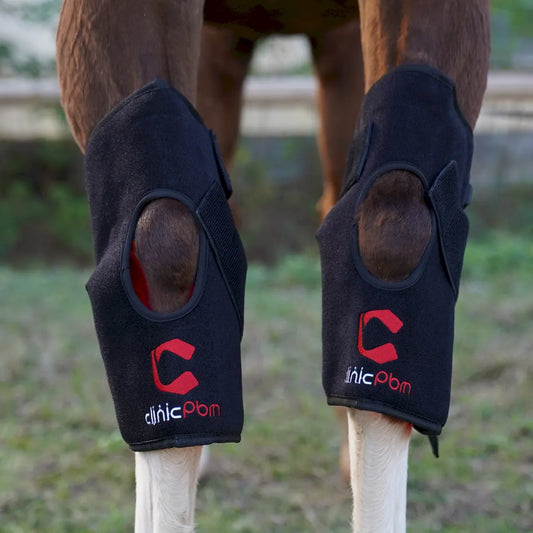
Leg, hock & joint wraps (from $188) — Hands-free design for limbs and joints. Popular with riders who want convenient, consistent daily sessions.
-
Poll caps & neck wraps — Contoured for the poll and crest area. Lightweight design to keep horses calm.
-
Full-body blankets ($359) — Broad coverage for the back, topline, and large muscle groups.
Not sure which device is right for your situation? Email us at support@pbmequine.com — we're happy to help.
15. Do you have devices for dogs and cats?
Yes. We offer:
-
Dog Therapy Wrap ($189) — For general comfort and recovery support
-
Dog Leg Therapy Mat ($199) — With built-in rechargeable battery, ideal for senior dogs or post-activity recovery
-
Handheld Torch (from $119) — Works for dogs, cats, and horses
All devices use the same dual-wavelength technology (660 nm + 850 nm) designed for animal use.
16. Are PbmEquine devices battery-powered?
Most of our devices feature built-in rechargeable batteries, making them fully portable — no power outlet needed in the barn or on the road. Battery life varies by device; our wraps and mats typically support 2–3 full sessions on a single charge. Charging is done via standard USB cable.
17. Are PbmEquine devices EMF-free?
Yes. All PbmEquine devices are EMF-free certified, meaning they produce no measurable electromagnetic radiation beyond the therapeutic light wavelengths. This is an important safety consideration for both the animal and the handler.
Shipping & Orders
18. Where do you ship to?
We ship worldwide. Domestic US orders ship from our California warehouse. International orders may be subject to local duties and taxes, which are the responsibility of the buyer. Visit our Shipping Policy page for detailed delivery timeframes by region.
19. How long does shipping take?
US domestic orders typically arrive within 5–8 business days. International shipping times vary by destination — generally 7–15 business days. All orders include tracking information sent to your email once shipped.
20. Can I track my order?
Yes. Once your order ships, you will receive an email with your tracking number. You can also track your order anytime using our Track Your Order page.
Returns & Warranty
21. What is your return policy?
We offer a 30-day postage-paid return policy. If you're not fully satisfied within 30 days, contact us at support@pbmequine.com for a full refund. The item must be in the same condition as received, including original packaging. All returns must be pre-approved by PbmEquine. Once we receive and inspect the item, approved refunds are processed within 5 business days.
22. What does your warranty cover?
Every PbmEquine device comes with a One-Year Limited Warranty covering manufacturing defects and malfunctions under normal use. If your device stops working properly within the warranty period, contact us and we'll arrange a repair or replacement. The warranty does not cover damage from misuse, accidents, or unauthorized modifications.
23. How do I initiate a return or warranty claim?
Email our Customer Support team at support@pbmequine.com with your order number and a brief description of the issue. We'll respond within 1–2 business days with instructions. For returns, we'll provide the shipping address and a return authorization. Items sent without prior approval may not be eligible for refund.
Disclaimer: PbmEquine red light therapy devices are designed for general animal wellness and comfort. They are not intended to diagnose, treat, cure, or prevent any disease or medical condition. The information on this page is for educational purposes only and is not a substitute for professional veterinary advice, diagnosis, or treatment. Always consult a licensed veterinarian regarding your animal's specific health needs. Individual results may vary.