Red Light Therapy for Horse Arthritis: Complete Guide to 6 Joint Types and Integrated Treatment
Share
Complete Equine Arthritis Guide · 6 Joint Types · Integrated Treatment Protocols
A comprehensive professional guide to using red light therapy for horse arthritis across the six most commonly affected joint types — covering hock, fetlock, stifle, coffin, carpus (knee), and vertebral facet arthritis. Includes the 4-stage progression timeline, the integrated treatment spectrum that combines RLT with veterinary care, the honest reality that no treatment reverses arthritis but smart management dramatically extends comfortable working life, and the joint-specific application protocols that maximize therapeutic value across the long-term arthritis management journey.
Arthritis is the silent saboteur of equine performance. It doesn't announce itself with dramatic acute lameness like a hoof abscess or torn ligament — it accumulates gradually over months and years, manifesting first as subtle stiffness, then mild performance decline, then increasingly obvious limitations. By the time most owners definitively recognize "my horse has arthritis," substantial cartilage damage has typically already occurred. The good news: while arthritis cannot be reversed, smart management combining veterinary medicine, targeted therapies including red light therapy, appropriate exercise, and supportive lifestyle factors can dramatically extend horses' comfortable working lives — often by many years beyond what owners initially expect possible.
This comprehensive guide takes you through what's actually happening in arthritic joints at the cellular level, why six specific joint locations account for the majority of equine arthritis cases, how red light therapy integrates with the modern arthritis treatment spectrum (joint injections, NSAIDs, regenerative therapies, physiotherapy, nutritional support), the practical session protocols matched to disease severity and treatment phase, and the honest assessment of what RLT can and cannot accomplish in arthritis management. Whether you're managing early-stage hock soreness in a teenage horse, supporting an aging campaigner through ongoing joint care, or trying to make sense of the conflicting advice surrounding arthritis treatment options, this framework provides the systematic approach that consistently delivers good outcomes.
Why Arthritis Demands Lifelong Multi-Modal Management Rather Than Single-Treatment Hope
Equine arthritis (formally called degenerative joint disease or DJD) involves the progressive breakdown of cartilage cushioning joint surfaces, accompanied by inflammation, bone changes, and gradual loss of joint function. The condition develops from a combination of aging, repetitive stress, trauma, conformation factors, and sometimes genetic predisposition. Once cartilage damage occurs, no treatment reverses it — including stem cells, PRP, surgery, supplements, or red light therapy. What integrated arthritis management accomplishes is meaningful: optimizing comfort and function, slowing disease progression, and extending the years of comfortable athletic capacity. Photobiomodulation through red light therapy is one important component within this integrated approach, supporting cellular health at the joint level while pharmaceutical, surgical, and rehabilitative therapies work through their respective mechanisms.
affected
show some arthritis
reverse cartilage damage
with good management
There Is No Cure for Equine Arthritis — But There Is Excellent Management
Setting realistic expectations is the foundation of successful arthritis management. No treatment — conventional or alternative — reverses cartilage damage once it has occurred. Marketing claims promising arthritis "reversal" or "regeneration" through specific products, supplements, or therapies should be approached with extreme skepticism. What good management does accomplish is genuinely valuable: maintaining your horse's comfort, slowing disease progression, optimizing function, and often extending comfortable working life by many years. Red light therapy for horses with arthritis is one valuable component within this integrated management approach — supporting cellular health and reducing inflammation alongside veterinary diagnostics, pharmaceutical interventions, joint injections, regenerative therapies, physiotherapy, and lifestyle optimization. The realistic goal isn't reversal — it's optimization.
What Is Equine Arthritis: The Cellular Reality
Understanding what happens in arthritic joints at the cellular level helps explain why integrated treatment matters and where red light therapy for horse arthritis specifically contributes. Equine arthritis — technically called degenerative joint disease (DJD) or osteoarthritis (OA) — involves progressive breakdown of articular cartilage, the smooth tissue covering the ends of bones at joint surfaces.
In healthy joints, articular cartilage provides smooth gliding surfaces and shock absorption while synovial fluid lubricates movement. The cartilage tissue is unique in that it has no direct blood supply — it receives nutrients through diffusion from the synovial fluid and underlying bone. This anatomical reality has crucial consequences: cartilage has limited capacity for self-repair when damaged, healing processes are extremely slow when they occur, and inflammatory factors significantly accelerate degradation. Once the cartilage begins breaking down, the process tends to be progressive rather than self-limiting.
The arthritis cascade unfolds across multiple cellular pathways. Initial cartilage damage from repetitive stress, trauma, or aging triggers inflammation in the synovial membrane. Inflammatory cytokines (TNF-alpha, IL-1, IL-6, and others) accumulate in the joint, accelerating cartilage breakdown. Cartilage fragments shed into the joint space, further driving inflammation. The synovial fluid changes composition, becoming less viscous and less protective. Over time, bone remodeling occurs at the joint margins (creating the classic bony spurs visible on radiographs), the joint capsule thickens, and motion progressively decreases. Pain accompanies each stage of this progression, driving the lameness and behavior changes owners observe.
This is where red light therapy for horses provides meaningful intervention. Photobiomodulation addresses several arthritic pathways simultaneously: cytochrome c oxidase activation increases mitochondrial ATP production supporting cellular health in remaining cartilage and surrounding tissues; near-infrared wavelengths penetrate 3-5 cm into joint structures, reaching deep enough to influence joint capsules and surrounding deep soft tissue; nitric oxide release improves microcirculation in the synovial membrane and periarticular tissues; inflammatory cytokine modulation reduces the chronic inflammation driving ongoing cartilage damage. None of these effects reverse existing damage, but they collectively support the cellular processes that maintain remaining joint health and slow disease progression.
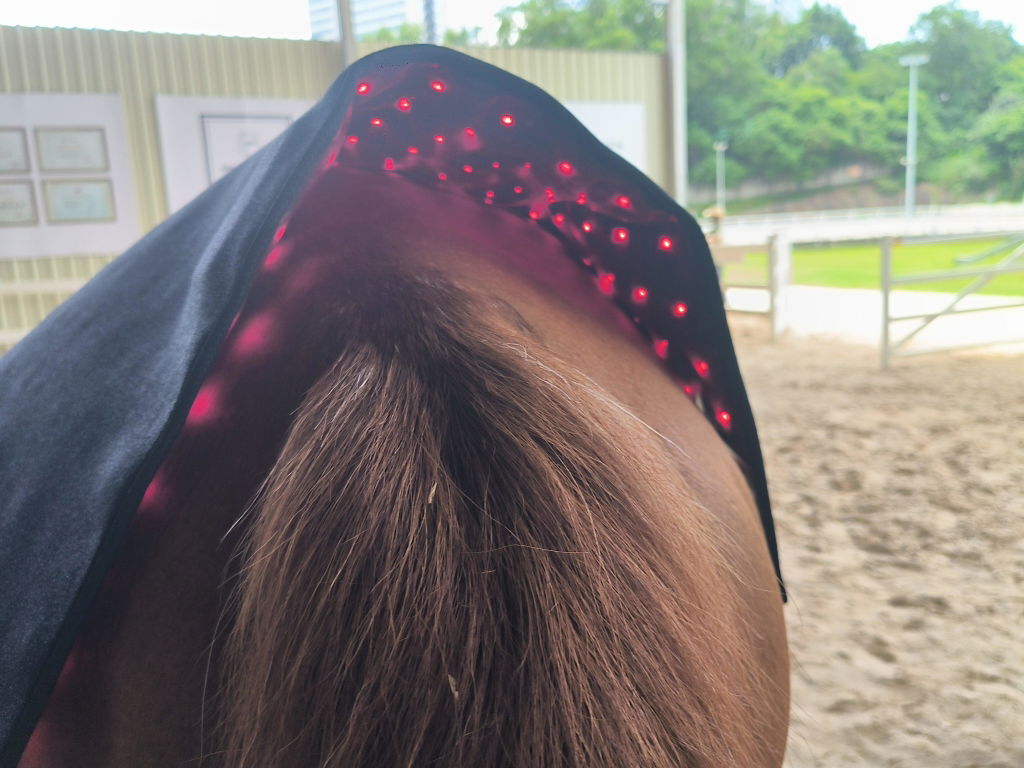
For owners building integrated arthritis management programs, exploring the full range of options for red light therapy for horses demonstrates how different device forms (hand-held for spot joint treatment, pads/wraps for leg-mounted joint applications, full blankets for whole-body care including back-related arthritis) serve different aspects of comprehensive joint care across the horse's body.
The 6 Most Common Types of Horse Arthritis
Equine arthritis affects multiple joint types, each with distinct presentations, severity patterns, and treatment considerations. The six types below account for the vast majority of equine arthritis cases — understanding which type affects your horse helps you and your veterinarian build appropriate management protocols.
Hock Arthritis
Tarsus / Tarsometatarsal / Distal Intertarsal JointsHock arthritis is the most common type of arthritis in performance horses and the leading cause of hind-end lameness across virtually every discipline. The hock joint complex (tarsus) consists of multiple individual joints, with the lower hock joints (tarsometatarsal and distal intertarsal) most commonly affected. The condition develops from repetitive concussion, conformational factors (cow-hocked, sickle-hocked conformations are predisposed), aging, and the high engagement demands of dressage, jumping, Western performance, and other disciplines requiring substantial hind-end loading.
Strong supportive role across the hock arthritis management timeline. Apply 15-20 minute sessions on both medial and lateral aspects of the affected hock(s) — 3-4 times weekly for ongoing management, daily during flare-ups or post-injection periods. The 3-5 cm penetration of 850 nm near-infrared reaches into the lower hock joints where the actual degeneration occurs.
Fetlock Arthritis (Osselets)
Metacarpophalangeal / Metatarsophalangeal JointFetlock arthritis — sometimes called osselets when affecting young athletic horses — is a degenerative arthritis of the fetlock joint commonly seen in young, athletic horses involved in high-impact sports like racing and jumping. Repetitive stress on the fetlock causes inflammation, cartilage damage, and eventual bony outgrowths that restrict motion. Common signs include swelling and heat around the fetlock joint, stiffness especially after rest, pain or sensitivity to touch, and lameness in advanced cases. Early intervention significantly improves prognosis.
Excellent supportive role given the relatively superficial location of the fetlock joint (closer to skin surface than deeper joints). Apply 15-20 minute sessions directly over the affected fetlock — daily during active inflammation, 3-4 times weekly for maintenance. Both 660 nm and 850 nm wavelengths contribute effectively given the joint's accessibility.
The vet diagnosis foundation supporting effective arthritis management aligns with comprehensive equine joint care principles across all conditions. Many horses develop multiple concurrent arthritis types simultaneously — hock arthritis combined with fetlock issues, or stifle problems alongside vertebral facet involvement. This is part of why disease management benefits from cluster-based approaches: red light therapy for laminitis in horses covers the other major chronic disease that often appears alongside arthritis in aging or metabolically-challenged horses, with similar principles of integrated multi-modal management applying to both conditions.
Stifle Arthritis
Femoropatellar / Femorotibial JointsStifle arthritis affects the large joint complex equivalent to the human knee — the most complex joint in the horse, with multiple compartments and ligamentous structures. The stifle is critical for hind-end propulsion, jumping, and athletic engagement. Arthritis in this joint significantly affects athletic capacity and is particularly impactful in jumping and eventing horses. The condition often develops alongside or following ligamentous injuries within the joint complex.
Strong supportive role given the substantial muscle tissue surrounding the stifle. Apply 15-20 minute sessions on the affected stifle area, focusing on multiple positions around the joint to cover its complex anatomy. 850 nm penetration reaches into the joint capsule and surrounding deep soft tissue effectively.
Coffin Joint Arthritis
Distal Interphalangeal Joint (within hoof)Coffin joint arthritis affects the lowest joint in the horse's limb, located within the hoof itself. The condition often coexists with other hoof-related problems and can be challenging to differentiate from various hoof pain sources. Affected horses typically show a shorter stride, particularly with circles or hard surface work, and may respond to perineural blocks of the digital nerves. The location within the hoof creates unique challenges for traditional treatment access.
Moderate supportive role given the deep location within the hoof. Apply 15-20 minute sessions on the affected hoof, particularly above the coronary band and along the heel bulbs. The hoof capsule limits direct light penetration, so RLT works best alongside primary coffin joint injections and farrier care optimizing biomechanics.
Carpus (Knee) Arthritis
Antebrachiocarpal / Middle Carpal JointsCarpus arthritis affects the "knee" of the front legs — a complex joint with multiple compartments commonly affected in racing Thoroughbreds and other high-impact athletic horses. The condition often develops following carpal chip fractures or repetitive stress from intensive training. Affected horses typically show front-end lameness, knee-area swelling, and reduced flexion range during examination.
Strong supportive role given the joint's relatively superficial location. Apply 15-20 minute sessions on the affected knee area, particularly during post-arthroscopy recovery periods when cellular healing benefits are most valuable. Pads and wraps designed for knee application are particularly suited to consistent treatment delivery.
Vertebral Facet Arthritis
Cervical / Thoracic / Lumbar Facet JointsVertebral facet arthritis affects the small joints between adjacent vertebrae in the cervical (neck), thoracic (back), and lumbar (lower back) regions. Cervical facet arthritis is increasingly recognized as a major source of forelimb lameness and neck pain. Thoracic and lumbar facet arthritis contribute to chronic back pain often misattributed to saddle fit or muscle issues. The condition typically progresses gradually with symptoms developing slowly over months or years.
Excellent supportive role along the spine. Apply 15-20 minute sessions along both sides of the spine in the affected region, particularly important given the deep paraspinal muscle tension typically accompanying vertebral facet pain. Pads/wraps designed for back applications or full equine blankets provide most efficient coverage.
The 4-Stage Progression of Equine Arthritis
Understanding how arthritis typically progresses helps you identify the current stage of your horse's condition and select appropriate management intensity. The four stages below characterize the typical disease course — though individual horses can move through stages at very different rates depending on management quality, underlying joint factors, and use patterns. Across all four stages, red light therapy for horse arthritis plays an increasingly important supportive role as the condition progresses, complementing the primary treatments that change at each stage.
4-Stage Progression of Equine Arthritis
Each stage represents a meaningful change in clinical presentation, treatment intensity, and prognosis.
The progression timeline varies enormously between individual horses. Some horses spend years in early stages with appropriate management; others progress through all stages within 2-3 years despite optimal care. Genetic factors, conformation, training history, and management quality all influence progression rates. The unifying principle: early intervention combined with consistent long-term management consistently produces better outcomes than waiting until advanced stages to begin serious treatment.
The Complete Treatment Spectrum: How RLT Integrates with Modern Arthritis Management
Modern equine arthritis management uses a spectrum of treatments rather than relying on any single intervention. The matrix below maps how red light therapy for horses integrates with each component of the complete treatment spectrum — understanding these relationships helps you build comprehensive management protocols with your veterinarian for red light therapy for horse arthritis applications matched to your specific situation.
| Treatment Modality | Role | Mechanism | RLT Integration |
|---|---|---|---|
| NSAIDs (Bute, Equinoxx, Banamine) | First-line | Reduces inflammation pharmacologically | Complementary — different cellular pathways |
| Corticosteroid Joint Injections | Local treatment | Direct anti-inflammatory effect in joint | Synergistic — extends injection benefits |
| Hyaluronic Acid (Adequan) | Joint support | Replenishes synovial fluid quality | Complementary — supports overall joint health |
| IRAP (Interleukin Receptor Antagonist) | Regenerative | Blocks inflammatory IL-1 signaling | Synergistic — additional inflammation control |
| PRP (Platelet-Rich Plasma) | Regenerative | Growth factors support healing | Complementary — supports cellular health |
| Stem Cell Therapy | Advanced regenerative | Tissue regeneration support | Complementary — cellular environment optimization |
| Arthroscopic Surgery | Structural | Removes damaged tissue/chips | Post-surgery — supports cellular recovery |
| Physiotherapy / Bodywork | Functional | Maintains mobility and strength | Excellent companion — before/after sessions |
| Nutritional Support | Maintenance | Cartilage and joint nutrition | Foundation — long-term cellular support |
| Farrier Optimization | Biomechanical | Reduces concussion and stress | Independent — but essential alongside |
Red Light Therapy Works Best as Part of the Complete Treatment Spectrum
Across all six arthritis types and all four progression stages, the consistent finding is that red light therapy delivers most value when integrated with the broader treatment spectrum rather than used in isolation. Standalone RLT can support cellular health and may produce noticeable improvements in mild cases, but the dramatic clinical results typically come from combining RLT with appropriate veterinary diagnostics, pharmaceutical and biological interventions, physiotherapy, and lifestyle optimization. The owners who consistently report the best outcomes are those who view RLT as one valuable component of comprehensive care rather than as a primary alternative to conventional treatment.
Prepares joint tissue and reduces inflammation before scheduled injections
Supports healing and extends benefits 6-12 weeks after injections
Cellular support between veterinary interventions
Warms tissue and prepares joints before athletic activity
Recovery support after work to manage inflammation
Acute symptom support during arthritis flares
Understanding the cellular mechanisms supporting integrated arthritis management aligns with the broader principles of photobiomodulation across equine conditions. Photobiomodulation for equine recovery covers the underlying cellular science applicable to arthritis management as well as the many other conditions where RLT plays a supportive role — the same biological pathways drive recovery across the full spectrum of equine therapeutic applications.
Realistic Expectations Drive Successful Arthritis Management
After working through the joint types, progression stages, and treatment spectrum, the consistent message is realistic expectation management. Arthritis is a progressive condition that no current treatment reverses, but smart management consistently extends comfortable working life by many years beyond what most owners initially expect. Red light therapy for horses with arthritis is a valuable component within integrated management — but it's not magic. Owners who view RLT as one tool among several typically achieve good long-term outcomes; owners hoping that RLT alone will resolve arthritis often face disappointment. The successful arthritis management horses I've seen consistently across thousands of cases share common features: early veterinary diagnosis, integrated multi-modal treatment from the beginning, consistent long-term application of supportive therapies including RLT, and realistic expectations about progression and outcomes. This combination, applied consistently over years, produces the meaningfully extended comfortable career that good arthritis management delivers.
Practical Application Protocols by Joint Type
Different joints require slightly different application approaches based on anatomy and accessibility. The protocols below provide joint-specific guidance for optimal red light therapy for horse arthritis application across the six arthritis types — helping you adapt red light therapy for horses to the specific anatomy of each affected joint area.
Hock Arthritis Protocol
Position the device on both medial (inside) and lateral (outside) aspects of the affected hock, with particular attention to the lower hock area where most degenerative arthritis occurs. Apply 15-20 minute sessions, rotating between medial and lateral positions or using devices that allow simultaneous coverage of both sides. Frequency: 3-4 times weekly for ongoing management; daily for 1-2 weeks following joint injections to extend benefits; daily during flare-ups until symptoms stabilize. Pad and wrap devices designed for hock coverage are particularly suited to consistent application.
Fetlock Arthritis Protocol
The fetlock's relatively superficial location allows efficient direct application. Position the device directly over the affected fetlock from medial, lateral, anterior, and posterior aspects across the session. Apply 15-20 minute sessions, daily during active inflammation, 3-4 times weekly for maintenance. Both 660 nm and 850 nm wavelengths contribute effectively given the joint's accessibility. Hand-held devices work well for spot fetlock treatment; pad devices designed for lower leg wrapping provide hands-free application.
Stifle Arthritis Protocol
Given the stifle's substantial size and surrounding muscle tissue, allow generous session duration (20-25 minutes) for adequate coverage. Apply on multiple positions around the joint to cover its complex anatomy — anterior, medial, and lateral aspects. 850 nm penetration is essential to reach the joint capsule and surrounding deep soft tissue effectively. Frequency: 3-4 times weekly for maintenance; daily during flare-ups; intensified application 48 hours before athletic events.
Coffin Joint Arthritis Protocol
The deep location within the hoof creates unique challenges. Position the device above the coronary band, along the heel bulbs, and on accessible aspects of the lower hoof. 15-20 minute sessions, focused on multiple positions for adequate coverage. RLT works best alongside primary coffin joint injections and farrier care — the hoof capsule limits direct light penetration, so realistic expectations are essential. For horses with concurrent hoof problems, integrate with broader red light therapy for horse hoof problems protocols covering the full spectrum of hoof-level conditions including coffin joint involvement.
Carpus Arthritis Protocol
The knee's superficial location allows efficient direct application. Apply on anterior, medial, and lateral aspects of the affected carpus. Hand-held devices work well; pads designed for knee wrapping provide excellent hands-free application during the longer sessions valuable for this complex joint. Post-arthroscopy recovery periods particularly benefit from daily application.
Vertebral Facet Arthritis Protocol
Apply 15-20 minute sessions along both sides of the spine in the affected region — cervical for neck arthritis, thoracic/lumbar for back arthritis. Given the substantial paraspinal muscle tissue, longer sessions (20-25 minutes) often deliver better results. Pads designed for back applications or full equine blankets provide most efficient coverage. Particularly important given the deep paraspinal muscle tension typically accompanying vertebral facet pain — RLT addresses both the joint inflammation and surrounding muscle involvement simultaneously.
Support Comprehensive Arthritis Management with PbmEquine Therapy Devices
PbmEquine devices deliver dual-wavelength photobiomodulation (660 nm + 810-850 nm) designed for the deep tissue penetration that horse arthritis management requires. Whether you need a hand-held device for spot treatment of specific joints (fetlock, knee), a pad/wrap for hock or knee application during longer sessions, or a full equine blanket for vertebral facet arthritis and back-related joint issues — PbmEquine offers the right form factor for your management protocol. Every device features EMF-free certification, 12-month warranty, 30-day postage-paid returns, and clinical-grade specifications. Use code PBME10 for 10% off your first order. Always coordinate use with your veterinarian for integrated arthritis management protocols that combine RLT with appropriate primary treatments.
Frequently Asked Questions About Red Light Therapy for Horse Arthritis
Does red light therapy work for horse arthritis?
Yes — provides meaningful supportive benefit when integrated with veterinary diagnosis and primary treatments. Mechanisms address arthritis progression factors: cytochrome c oxidase activation increases ATP production for cellular repair, near-infrared (810-850 nm) penetrates 3-5 cm into joint structures, nitric oxide release improves microcirculation, inflammatory cytokine modulation reduces chronic inflammation driving cartilage degradation. Standard protocol: 15-20 minute sessions on affected joints daily during flare-ups, transitioning to 3-4 times weekly for maintenance. RLT does NOT reverse cartilage damage or replace veterinary diagnosis, joint injections, or anti-inflammatory medications. No cure exists for equine arthritis — RLT and other treatments manage pain and slow progression.
What is the most common type of arthritis in horses?
Hock arthritis is the most common type and the leading cause of hind-end lameness across virtually every equestrian discipline. The hock joint complex (tarsus) consists of multiple joints, with lower hock joints (tarsometatarsal and distal intertarsal) most commonly affected. Particularly common in Western performance horses, dressage horses, jumpers, and any horse with substantial hind-end engagement. Other common locations: fetlock joints (especially racing/jumping, sometimes called osselets), stifle joints, coffin joint (within hoof), knee/carpus joints (racing Thoroughbreds), vertebral facet joints (causing back pain). Most performance horses over age 10 show some arthritis in at least one joint.
Can red light therapy reverse horse arthritis?
No — RLT cannot reverse arthritis, and no other treatment (conventional or alternative) reverses arthritis either. Arthritis involves gradual breakdown of joint cartilage; once damage occurs, tissue cannot regenerate to original healthy state. What treatments including RLT accomplish: manage pain and inflammation, slow progression by reducing inflammatory drivers, support remaining cartilage and joint tissue health, improve quality of life and athletic capacity, extend functional career of affected horses. Goal isn't reversal — it's optimization within constraints of the underlying condition. Owners hoping for "reversal" face disappointment; owners focused on optimal long-term management achieve good outcomes.
How does red light therapy help horse joint pain?
Multiple complementary cellular mechanisms. Photobiomodulation reduces inflammation at joint level by modulating inflammatory cytokine signals. Near-infrared (810-850 nm) penetrates deep enough to reach joint capsules, surrounding soft tissue, even bone in some applications. Increased microcirculation supports oxygen/nutrient delivery to joint tissues, clearing inflammatory byproducts. Mitochondrial activation provides cellular energy for repair. Practical application: position device directly over affected joint, 15-20 minute sessions daily during discomfort, 3-4 times weekly for maintenance. Pain relief typically within 1-2 weeks of consistent application; functional improvements 4-8 weeks. Works best alongside primary treatments rather than standalone joint pain management.
What is the best treatment for arthritis in horses?
Integrated multi-modal approach combining several complementary therapies. Primary medical: NSAIDs (Bute, Equinoxx, Banamine) for pain/inflammation; joint injections (corticosteroids, hyaluronic acid, IRAP, PRP); advanced regenerative (stem cells, growth factors); surgery (arthroscopy) for selected cases. Supportive therapies: RLT for cellular support; physiotherapy and rehabilitation; proper farrier work; weight management; nutritional support (MSM, omega-3, glucosamine, chondroitin). Long-term: graduated exercise maintaining mobility, environmental optimization reducing concussion, regular veterinary assessment. No single treatment is "best" — optimal approach combines several modalities matched to specific horse's situation, severity, and use case.
Can I use red light therapy alongside joint injections?
Yes — works alongside injections rather than as replacement, and many veterinarians recommend the combination. Joint injections (corticosteroids, hyaluronic acid, IRAP, PRP, stem cells) deliver direct local treatment through different mechanisms than RLT. Combination delivers multi-mechanism support. Practical integration: RLT can begin immediately after injections without conflict; daily 15-20 minute sessions on injected joint support local healing and extend injection benefits; many owners report longer-lasting benefits from injections combined with consistent RLT; RLT increasingly valuable in weeks/months following injections as immediate effects fade. Always coordinate with veterinarian on integrated protocols for your specific horse.
How often should I use red light therapy on horse arthritis?
Depends on disease severity and treatment phase. Active flare-up: daily 15-20 minute sessions on affected joints, often multiple sessions for severe flares. Stable management (chronic but controlled): 3-4 times weekly with 15-20 minute sessions. Long-term wellness (mild arthritis with good function): 2-3 times weekly as part of regular care. Pre-event: additional sessions 24-48 hours before significant athletic work. Post-event: enhanced application 2-3 days after intense work. Cumulative effects principle — consistent long-term application matters more than intensive short-term use. Meaningful improvements typically with 4-6 weeks of consistent application during active management, with ongoing maintenance supporting long-term joint health.
What are the early signs of arthritis in horses?
Often subtle and easily missed. Earliest warning signs: stiffness when leaving stall (improves with warm-up); reluctance to engage hindquarters (particularly collected/hill work); shortened stride, especially trot; subtle performance reduction without obvious lameness; difficulty with specific movements (lateral work, jumping, transitions); preference for one lead, difficulty changing leads; increased warm-up time; mild swelling, heat, sensitivity around joints; reduced flexion range; behavior changes during work. Joint-specific: hock arthritis shows hind-end weakness; fetlock arthritis shows swelling/stiffness in affected legs; coffin joint mimics hoof issues; carpus shows knee swelling and front-end changes. Early veterinary evaluation when signs appear allows best long-term management outcomes.