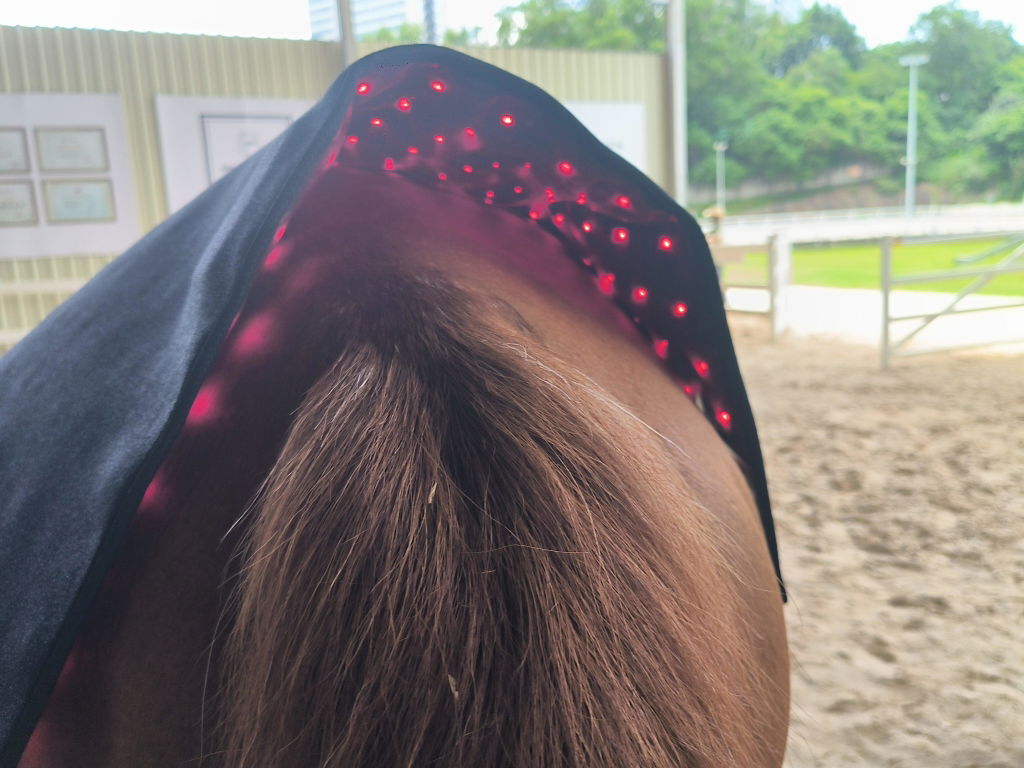
Red Light Therapy for Horse Stifle Problems: Understanding the Causes First
Share
The stifle — the horse's equivalent of a human knee — is one of the largest and most complex joints in the body, and problems there can be worrying and confusing. Owners who notice a hind-leg issue often ask whether red light therapy can help the stifle. The honest answer depends entirely on a key fact: "stifle problems" isn't one condition — it covers several very different issues, from a mechanical locking kneecap to developmental cartilage problems, arthritis, and soft-tissue injuries. Red light therapy may support comfort and recovery for some of these as a complementary measure, but only after a vet has diagnosed exactly what's going on. If your vet has identified the problem and approved supportive care, devices made for horses, like those in the equine red light therapy collection, are designed for that kind of gentle, supportive use.
This guide explains the different causes of stifle problems, why each needs different treatment, why veterinary diagnosis must come first, and where red light therapy genuinely fits — including the important reason it isn't the answer for the most common stifle issue.
The Short Answer
Stifle problems are varied — and the most common one, a locking patella, is a mechanical and muscle-strength issue that red light therapy cannot fix. The stifle can be affected by upward fixation of the patella (locking stifle), OCD, arthritis, and ligament or meniscal injuries — each needing very different treatment. So the first step is always veterinary diagnosis, never red light therapy. For stifle problems with a soft-tissue or muscular component, red light therapy may support comfort and recovery as a complementary measure once a vet has diagnosed the cause and approved it. But it cannot unlock a fixated patella, rebuild muscle, repair cartilage, or replace conditioning, surgery, or veterinary care.
First: The Stifle Is a Complex Joint
The stifle is comparable to the human knee — a large, intricate joint made up of bones (femur, tibia, and patella/kneecap), ligaments, menisci, cartilage, and muscles, all working together for movement and support of the hind leg. Because of this complexity, many different things can go wrong, and the signs (hind-leg stiffness, dragging the toe, a catching or jerky movement, swelling, or lameness) can look similar even when the underlying cause is very different.
That's why "stifle problem" should be treated as a starting point for investigation, not a diagnosis in itself.
The Main Causes of Stifle Problems
1. Upward Fixation of the Patella (Locking Stifle) — Most Common
The most common stifle issue, where the kneecap (patella) sticks in an extended position so the horse can't bend the hind leg normally — sometimes releasing with a sudden jerk. It's largely mechanical, strongly linked to weak hindquarter muscling, straight hindlimb conformation, youth, or being out of work. Importantly, mild cases are typically improved through conditioning and exercise to strengthen the muscles, plus corrective farriery — not therapy applied to the joint.
2. Osteochondritis Dissecans (OCD)
A developmental disorder of the cartilage and underlying bone in the stifle, typically in young horses, which can create loose cartilage fragments causing pain, swelling, and lameness. OCD is diagnosed with imaging and may require arthroscopic surgery.
3. Arthritis (Gonitis)
Inflammation and degenerative joint disease of the stifle can cause a more consistent lameness, often with changes visible on X-ray. Like other arthritis, it's managed rather than cured.
4. Ligament & Meniscal Injuries
Damage to the ligaments or menisci (the cartilage cushions) within or around the stifle is a soft-tissue injury that causes lameness and needs a soft-tissue-appropriate diagnosis and treatment plan.
5. Fractures & Infection
Less common but serious: fractures of the stifle bones, or joint infection. Joint infection is a veterinary emergency requiring urgent treatment.
Why this matters so much: A mechanical locking patella, a developmental OCD lesion, degenerative arthritis, and a torn ligament are completely different problems with completely different treatments. You can't tell which one you're dealing with by looking — and using red light therapy (or anything) to make the horse seem more comfortable without a diagnosis risks masking the problem and delaying the correct treatment.
Step One Is Always Veterinary Diagnosis
Because the stifle is complex and its problems so varied, a veterinary lameness workup comes first. To identify the specific cause, a vet may use:
- Physical exam and palpation of the stifle for heat, swelling, and pain.
- Gait and movement assessment, and flexion tests.
- Manual demonstration of a locking patella, where applicable.
- Imaging: X-rays (for bony changes, OCD, arthritis) and ultrasound (for ligaments and menisci); sometimes arthroscopy to look inside and treat the joint.
Only with a diagnosis can the right treatment begin — which might be muscle-strengthening conditioning and farriery (for a locking patella), arthroscopic surgery (for OCD), arthritis management, soft-tissue rehabilitation, or other vet-directed care. And only then can you know whether red light therapy has a sensible supporting role.
Where Red Light Therapy May Fit — and Where It Doesn't
With a diagnosis in hand and your vet's guidance, here's the honest role of red light therapy for the stifle.
What it may do: For stifle problems with a soft-tissue or muscular component, red light therapy may help support comfort and recovery as a complementary measure. It works through photobiomodulation: red (around 660nm) and near-infrared (around 850nm) light are absorbed by cells, thought to support local circulation and help modulate inflammation. As part of a vet-directed rehabilitation plan, it may support the muscular and soft-tissue side of recovery.
What it cannot do — including for the most common stifle problem: Red light therapy cannot unlock a mechanically fixated patella or rebuild the hindquarter muscle strength that a locking stifle actually requires — that comes from a conditioning and exercise program. It also cannot repair OCD cartilage lesions or torn ligaments and menisci, reverse arthritis, or replace surgery, corrective farriery, or veterinary care. For the most common stifle issue (locking patella), the real solution is strengthening and management, not light therapy.
It depends entirely on the cause: This is why diagnosis matters so much. For a soft-tissue strain in rehabilitation, red light therapy may be a helpful supportive tool. For a locking patella, the answer is a muscle-strengthening program; for OCD, it may be surgery. Your vet's diagnosis tells you which situation you're in. Because stifle issues so often present as hind-leg lameness, our guide on red light therapy for horse lameness explains how the bigger diagnostic picture fits together.
When to Call the Vet
Seek veterinary attention for any suspected stifle problem, and treat these as urgent:
- A leg that locks or won't bend normally, or a catching, jerky hind-leg movement.
- Sudden, severe lameness or reluctance to bear weight.
- Significant heat and swelling around the stifle, especially with signs of illness — possible joint infection (an emergency).
- Persistent or worsening hind-leg stiffness or lameness.
- Reduced performance or difficulty with hind-leg movement that doesn't resolve.
Early diagnosis gives the best chance of effective treatment — and red light therapy is never a substitute for that veterinary assessment.
Conclusion: Diagnose the Specific Problem First
The stifle is complex, and its problems are anything but uniform — a locking patella, an OCD lesion, arthritis, and a ligament injury all look like a "stifle problem" but demand completely different treatment. The most caring step is to resist treating the joint blindly and instead get a veterinary diagnosis of the specific cause. And it's worth knowing up front that the most common stifle issue — a locking patella — is fixed through muscle-strengthening conditioning, not therapy applied to the joint.
Once your vet has identified the cause and built a treatment plan, red light therapy may have a genuine supporting role for stifle problems with a soft-tissue or muscular component — gently aiding comfort and recovery as a complementary, non-invasive measure, used with veterinary approval and never as a replacement for proper diagnosis, conditioning, or treatment. Diagnose first, treat the real cause, and let supportive tools play their proper part. To explore devices designed for horses, see the PbmEquine equine red light therapy range.
Frequently Asked Questions
Can red light therapy help horse stifle problems?
It may help support comfort and soft-tissue recovery around the stifle — but only as a complementary measure once a vet has diagnosed the specific problem, and only where suitable. The stifle (the horse's knee equivalent) is complex, and "stifle problems" covers very different conditions: upward fixation of the patella (mechanical locking), OCD, arthritis, and ligament or meniscal injuries. Crucially, the most common issue — locking patella — is largely a mechanical and muscle-strength problem improved through conditioning, and red light therapy cannot unlock a fixated patella or rebuild muscle. Where a stifle problem has a soft-tissue or muscular component, it may support comfort within a vet-directed plan. It cannot diagnose, correct structural issues, replace surgery or conditioning, or substitute for veterinary care.
What causes stifle problems in horses?
Several distinct causes. The most common is intermittent upward fixation of the patella (UFP, or "locking stifle"), where the kneecap sticks in an extended position so the leg can't bend — often linked to weak hindquarter muscling, straight hindlimb conformation, youth, or being out of work. Others include osteochondritis dissecans (OCD, a developmental cartilage problem in young horses), arthritis (gonitis) of the stifle, ligament or meniscal injuries, and less commonly fractures or joint infection. Because these are so different — mechanical, developmental, degenerative, or soft-tissue — and need very different treatments, identifying the specific cause requires veterinary diagnosis.
Is a locking stifle treated with red light therapy?
Generally no — an important point. A locking stifle (upward fixation of the patella) is primarily a mechanical issue where the patella sticks, often related to weak muscling and conformation. The mainstay for mild cases is conditioning and exercise to strengthen the hindquarters and improve patellar stability, plus corrective farriery; severe cases may need veterinary procedures or surgery. Red light therapy cannot unlock a mechanically fixated patella or substitute for the muscle-strengthening exercise that addresses the root issue. It might support general muscle comfort as part of a conditioning program if a vet agrees, but it's not a treatment for the locking mechanism itself. The cornerstone is correct diagnosis and a vet-guided strengthening plan.
How are stifle problems diagnosed?
Through a veterinary lameness workup: physical examination and palpation of the stifle, gait and movement assessment, and flexion tests. For a suspected locking patella, the vet may demonstrate the fixation manually. Imaging is often key — X-rays to assess bones and check for OCD or arthritis, and ultrasound for soft-tissue structures like ligaments and menisci; sometimes arthroscopy to look inside and treat the joint. Because the stifle is complex and its problems range from mechanical to developmental to soft-tissue, this diagnostic process is essential to identify the specific condition before any treatment, including supportive red light therapy.
What can and can't red light therapy do for the stifle?
What it may do: once a vet has diagnosed the cause, red light therapy may help support comfort and recovery of soft tissue and muscle around the stifle through photobiomodulation — red and near-infrared light absorbed by cells, thought to support circulation and help modulate inflammation. For stifle problems with a soft-tissue or muscular component, it may be a useful supportive element in rehabilitation. What it cannot do: diagnose the problem, unlock a mechanically fixated patella, rebuild the muscle strength a locking stifle requires, repair OCD cartilage lesions or torn ligaments and menisci, reverse arthritis, or replace surgery, conditioning, corrective farriery, or veterinary care. Its role is narrow and supportive — aiding comfort within a vet-directed plan for the specific diagnosed cause.