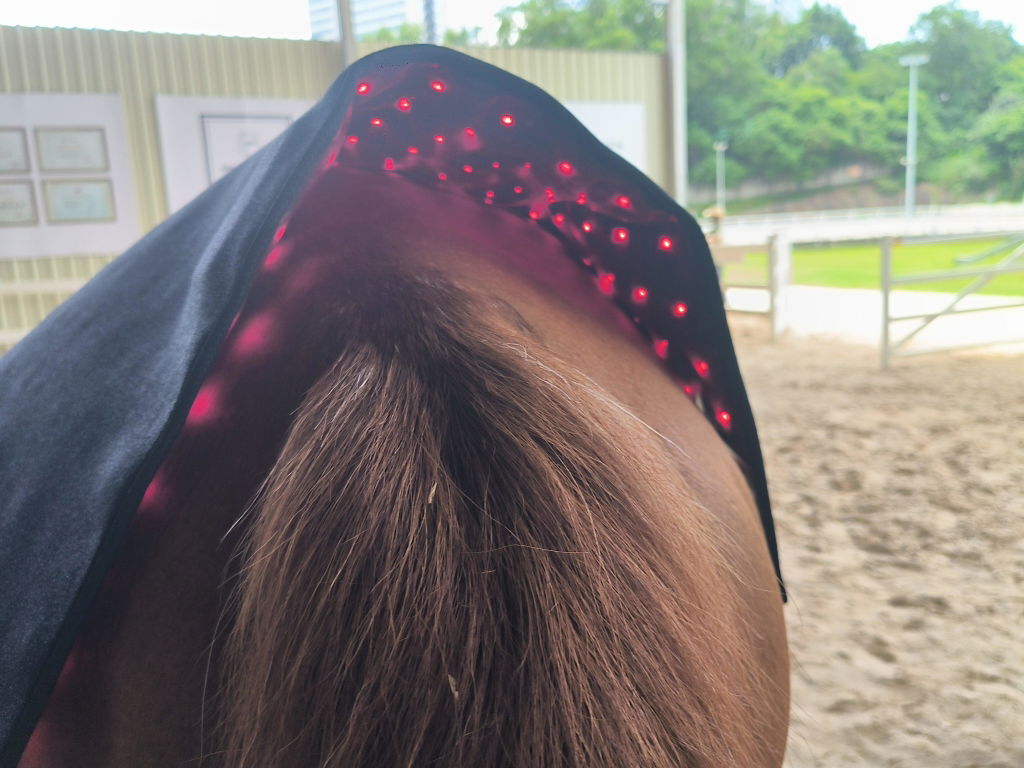
Why Do Equine Red Light Devices Use Two Different Wavelengths?
Share
If you've looked closely at equine red light devices, you've probably noticed most quality ones advertise two wavelengths — usually 660nm and 850nm. Which raises a natural question: why two? And if two is good, wouldn't three or four be even better? It's a fair question, and the honest answer cuts through a fair bit of marketing noise. You can see how dual-wavelength devices are built in the equine red light therapy collection at PbmEquine.
This guide explains why two wavelengths are the standard, what each one actually does, and the honest answer to whether more wavelengths are genuinely better — so you can read a spec sheet without being misled.
The Short Answer
Equine red light devices use two wavelengths because each reaches a different depth of tissue — 660nm for the surface, 850nm for deeper tissue — and combining them covers both key depth zones in one device. It's not about having "more" light; it's about covering complementary depths. And as for more than two wavelengths? That's usually a marketing angle, not a meaningful upgrade — what matters is having the right wavelengths at adequate intensity, not the highest count.
Why Two: Different Wavelengths Reach Different Depths
The whole reason for two wavelengths comes down to one fact: different wavelengths penetrate to different depths. A horse's body has tissue you might want to support at very different levels — from skin at the surface to muscle, tendon, and joints well beneath it. No single wavelength covers that whole range well.
| Wavelength | Depth | Suited to |
|---|---|---|
| 660nm (red) | Absorbed more at the surface | Skin and shallow tissue |
| 850nm (near-infrared) | Penetrates deeper | Muscle, tendon, joints beneath the surface |
Put the two together and a single device can support both surface and deeper tissue in one session, instead of being limited to one zone. That's the entire logic of a dual-wavelength device. For a closer look at how the two compare and when one might matter more, see our guide on 660nm vs 850nm for horses.
The Two Wavelengths Are a Team
The best way to think about it: the two wavelengths aren't competitors, they're teammates. Each covers what the other can't reach as well:
- 660nm handles the shallow zone — the surface tissue 850nm would partly pass through.
- 850nm reaches the deeper zone — the muscle and tendon 660nm can't reach effectively.
That complementary pairing is why "both" is usually the best answer, and why you so rarely see a serious general-purpose equine device with only one wavelength. To understand the physics of how deep each actually goes, our wavelength penetration guide goes deeper into the science.
So Why Not Three, Four, or Five Wavelengths?
Here's where the honest part comes in. If two wavelengths are good because they cover two depth zones, it's tempting to assume more must be better. Marketing often leans on this — "7 wavelengths!" sounds impressive. But it doesn't work the way the box implies:
More wavelengths ≠ better
The two standard wavelengths, 660nm and 850nm, already cover the surface and deeper depth ranges that matter most for equine use. Adding extra wavelengths doesn't necessarily improve results — and it can mean the device's total output is split across more wavelengths, potentially reducing the effective intensity of the two that actually matter. A high wavelength count on the box is not proof of a better device.
In other words, covering the right two depth zones well beats scattering output across many wavelengths. Quality is about hitting the key wavelengths at adequate intensity — not racking up the highest number.
What Actually Matters in a Device
So if it's not the number of wavelengths, what should you actually look at? Three things matter far more:
- The right wavelengths: Does it include 660nm and 850nm — the two that cover surface and deep tissue?
- Adequate irradiance: Is the light strong enough at the tissue to be meaningful in a reasonable session?
- Good coverage: Are the emitters spaced to cover the treatment area evenly?
The takeaway: A well-made device with the two right wavelengths, good intensity, and even coverage beats a device boasting five or six wavelengths at weaker output. Read the spec sheet for the right wavelengths and adequate power — not the biggest wavelength count.
A Note on Using Any Device Responsibly
Specs are only half the story. However well-chosen a device's wavelengths are, red light therapy remains a complementary, supportive measure — not a treatment in itself. For any injury, lameness, or health concern, get a veterinary diagnosis first, and use any device only as part of a vet-guided plan. The right wavelengths don't change the fundamentals of responsible care.
Conclusion: Two Wavelengths, One Smart Design
Equine red light devices use two wavelengths for a simple, sound reason: 660nm covers surface tissue, 850nm reaches deeper, and together they cover the depth ranges that matter — in one device. They're complementary teammates, not a case of "more is more." And when it comes to devices boasting three, four, or more wavelengths, remember that what counts is the right wavelengths at adequate intensity, not the sheer number on the label.
Understand that, and you can read any device's spec sheet clearly — looking past the wavelength-count marketing to what actually makes a device useful. To explore dual-wavelength devices designed for horses, see the PbmEquine equine red light therapy range, and always use any device as a supportive part of veterinary-guided care.
Frequently Asked Questions
Why do equine red light devices use two different wavelengths?
Most quality equine red light devices combine two wavelengths — typically 660nm red light and 850nm near-infrared — because each reaches a different depth of tissue. Red light around 660nm is absorbed more at the surface, making it suited to skin and shallow tissue, while near-infrared around 850nm penetrates deeper toward muscle, tendon, and joints. By combining the two, a single device can support both surface and deeper tissue in one session, rather than being limited to one depth range. This pairing covers the two key depth zones that matter for most equine applications, which is why dual-wavelength devices are so common. It's about covering complementary depths, not just having "more" light.
Is a red light device with more than two wavelengths better?
Not necessarily — more wavelengths is not automatically better, and it's often a marketing angle rather than a meaningful advantage. The two standard wavelengths, 660nm and 850nm, already cover the surface and deeper tissue depth ranges that matter most for equine use. Adding extra wavelengths doesn't necessarily improve results and can sometimes mean the device's total output is split across more wavelengths, potentially reducing the effective intensity of the ones that matter. What actually determines a device's usefulness is whether it includes the right wavelengths (660nm and 850nm), delivers adequate irradiance, and has good coverage — not the sheer number of wavelengths listed on the box. Be skeptical of claims that simply boast a high wavelength count.
What does each wavelength do in an equine red light device?
In a typical dual-wavelength device, the 660nm red light is absorbed more at the surface and is suited to skin and shallow tissue, while the 850nm near-infrared penetrates deeper and is more relevant to muscle, tendon, and joint tissue beneath the surface. They're complementary rather than interchangeable: one handles the shallow zone, the other reaches deeper. This is why combining them in one device is so useful — you get coverage across both depth ranges in a single session instead of being limited to just surface or just deep tissue. The two wavelengths are essentially a team, each covering what the other can't reach as well.
Can a device have just one wavelength?
Yes, some devices use a single wavelength, and that can be appropriate for a specific, narrow purpose — for example, a device focused only on surface tissue might use just 660nm. However, for general equine use where you may want to support both shallow and deeper tissue, a single wavelength limits you to one depth range. That's why dual-wavelength devices combining 660nm and 850nm are popular and versatile: they aren't restricted to one depth. If you're choosing a device for varied, general supportive use, a dual-wavelength model usually offers more flexibility than a single-wavelength one. The right choice depends on what you actually need it for.
Do I need to choose between 660nm and 850nm?
For most owners, no — you don't have to choose, because dual-wavelength devices include both, which is generally the most versatile option. The reason both exist is that they do different jobs: 660nm for surface tissue and 850nm for deeper tissue. Only in specific situations where you're targeting only shallow or only deep tissue might a single wavelength make sense. For general supportive use, having both wavelengths in one device means you're covered across depths without having to pick. If you're weighing 660nm versus 850nm for a particular need, it's worth understanding what each does, but for everyday versatility, both together is usually the practical answer.