Is Red Light Therapy Effective for Horses?
Share
Red light therapy has moved from a niche practice into mainstream equine care, appearing in racing yards, dressage barns, and veterinary rehabilitation settings. With that rise comes a fair and important question: is red light therapy actually effective for horses, or is it just hype?
It's a question that deserves an honest answer rather than marketing enthusiasm. The truth is nuanced: red light therapy — properly called photobiomodulation — shows genuine promise and is supported by a plausible mechanism and a growing body of research. But it is not a miracle cure, its effectiveness can vary depending on what's being treated, and it works best as a complementary therapy used alongside veterinary care.
This guide takes an evidence-based look at the question. We'll cover how red light therapy is believed to work, what the research actually shows (including its limitations), the uses where the evidence is strongest, and how to set realistic expectations. The goal is to help you understand what red light therapy can and can't reasonably be expected to do for your horse.
The Honest Short Answer
Red light therapy shows promise as an effective complementary therapy for horses — supported by a plausible mechanism and growing research — but it is not a cure-all, the evidence is still developing, and results can vary by condition. It works best as a supportive tool, used consistently and appropriately, within veterinary-guided care.
That balanced view — neither dismissing red light therapy nor overselling it — is the most accurate way to understand its effectiveness. The rest of this article explains the reasoning behind it, so you can make an informed judgment for your own horse.
It's worth noting why this question matters so much for horse owners specifically. Red light therapy is a meaningful investment, and horses present unique considerations — they're large animals with slow-healing soft tissues, demanding athletic careers, and conditions like tendon and joint problems that conventional treatment alone can be slow to resolve. That combination is exactly why owners are drawn to supportive therapies, and also why it's worth understanding the evidence honestly before investing. The growing adoption of red light therapy in professional equine settings, from rehabilitation facilities to competition barns, reflects genuine interest from people who work with horses daily — though, as we'll see, adoption and proven effectiveness aren't quite the same thing. Brands such as PbmEquine have built their devices specifically around equine needs for this reason.
How Red Light Therapy Is Believed to Work
To judge whether something is effective, it helps to understand how it's supposed to work in the first place. Red light therapy operates through a mechanism called photobiomodulation.
Devices emit specific wavelengths of light — typically red around 660nm and near-infrared around 850nm. These wavelengths are absorbed by the mitochondria within cells, where they are thought to stimulate the production of ATP (cellular energy). This increase in available cellular energy is the foundation of the therapy, because it may support the processes the body uses to heal and recover.
From this central mechanism, several effects relevant to equine health are believed to follow:
- Improved circulation: Increased local blood flow, helping deliver oxygen and nutrients to tissues.
- Collagen production: Support for the collagen synthesis involved in repairing soft tissues.
- Reduced inflammation: Modulation of the inflammatory response that accompanies injury and exertion.
- Tissue repair support: Assistance to the cellular processes underlying recovery.
Crucially, because the effects depend on light actually reaching and being absorbed by the target tissue, delivering the correct wavelengths at adequate power matters enormously. A device that doesn't deliver effective wavelengths, or can't penetrate to the target tissue, won't produce results regardless of claims. This is why device quality is so closely tied to whether the therapy is effective — a point explored in PbmEquine's overview of why horse-specific red light therapy devices matter.
What Does the Research Actually Show?
Here's where honesty is essential. Red light therapy for horses is an area of real, promising research — but also one where the evidence is still developing and where overclaiming would be misleading.
The Encouraging Side
There is genuine scientific support for red light therapy. Photobiomodulation has been studied across multiple species with encouraging results for wound healing, pain management, and recovery. In horses specifically, a 2019 review in the journal Animals described photobiomodulation as a "promising adjunctive treatment" for equine tendon and ligament injuries. The mechanism is biologically plausible and consistent with broader photobiomodulation research, which is why the therapy has been adopted so widely in equine sports medicine and rehabilitation.
The Necessary Caveats
The same researchers who see promise also note real limitations: the evidence base is still growing, results are not always consistent across studies, and standardized protocols (wavelength, dose, timing, frequency) are not fully established. Some studies have found limited or no significant effect for certain applications — for example, research has shown that effects can vary by injury type — which underscores that effectiveness isn't guaranteed in every case.
So the honest takeaway is this: red light therapy is supported by promising evidence and a sound mechanism, but it is not a proven, guaranteed cure, and more standardized research is still needed. Understanding both sides lets you approach it with appropriate, realistic confidence rather than either blind faith or unfair dismissal.
Where Red Light Therapy Is Most Commonly Used
Red light therapy is applied across a range of equine situations. Understanding where it's typically used helps clarify what "effective" tends to mean in practice — usually as support for recovery and comfort rather than a standalone cure.
Soft Tissue: Tendons & Ligaments
One of the most studied applications, where photobiomodulation has been described as a promising adjunctive treatment. Because these tissues heal slowly, supportive therapy is of particular interest. (We cover this in depth in our dedicated guide on red light therapy and equine tendon injuries.)
Muscle Recovery
Used to support recovery in performance horses, helping manage the muscle fatigue and soreness that come with intense training and competition.
Pain & Inflammation
Applied to help manage discomfort and modulate inflammation associated with various conditions, as part of a broader comfort and recovery approach.
Joints
Used to support horses with joint conditions such as arthritis, where the deeper-penetrating 850nm wavelength is especially relevant for reaching the affected structures.
Wounds & Skin
Applied to support the healing of surface wounds and skin conditions, where the 660nm wavelength is well suited — though evidence here, as elsewhere, can vary by case.
Important: For any of these uses — especially injuries, lameness, or health concerns — a veterinarian should diagnose the condition and guide treatment. Red light therapy is a supportive element within that plan, not a substitute for professional diagnosis and care.
Setting Realistic Expectations
Much of whether red light therapy "works" for an owner comes down to having realistic expectations about what effectiveness looks like. Misunderstanding this is a common reason people feel disappointed.
It's gradual, not instant. Red light therapy works through cumulative cellular effects over time. It is not a treatment where you'll see dramatic overnight change. Results, where they occur, typically develop over a course of consistent sessions across days and weeks.
Consistency is essential. Because the effect is cumulative, occasional or sporadic use is unlikely to be effective. The owners who get the most from red light therapy are those who apply it regularly as part of a routine. This is also why a practical, easy-to-use device matters — a device you'll actually use consistently is far more likely to be effective than a "better" one that's awkward and ends up unused.
It's supportive, not curative. The realistic role of red light therapy is to support recovery, comfort, and tissue health — complementing rest, appropriate exercise, nutrition, and veterinary care. Expecting it to single-handedly cure a serious condition sets it up to "fail" against an unfair standard.
The right frame: Ask not "will this cure my horse?" but "can this be an effective supportive part of my horse's care?" Framed that way — as a complementary therapy applied consistently within a vet-guided plan — red light therapy has a genuine, evidence-supported role to play.
How to Judge Whether It's Working for Your Horse
Because effectiveness can vary by individual and condition, it's worth tracking results thoughtfully rather than relying on impressions. A few practical ways to assess whether red light therapy is helping your horse:
- Keep simple records: Note the condition you're treating, your treatment schedule, and observations over time. Patterns are easier to see in writing than from memory.
- Watch for gradual changes: Look for incremental improvements in comfort, movement, or recovery over weeks — not dramatic overnight shifts.
- Involve your veterinarian: For diagnosed conditions, your vet can assess progress objectively (for example, with follow-up examination) and help distinguish the therapy's contribution from other factors like rest and rehabilitation.
- Be honest about variables: Recovery usually involves several factors at once. Red light therapy is one supportive input among many, so credit and expectations should be proportionate.
This measured approach helps you make a fair assessment rather than expecting too much or dismissing the therapy prematurely.
How to Give Red Light Therapy the Best Chance of Working
If you want red light therapy to be as effective as possible for your horse, several factors are within your control:
- Use the right wavelengths: Choose a device delivering both 660nm red and 850nm near-infrared light, so you can address both surface and deeper tissues.
- Choose a quality, horse-specific device: Effectiveness depends on delivering adequate light to the target tissue. A well-built device designed for equine use, with sufficient power, gives the therapy a real chance to work.
- Be consistent: Apply treatment regularly over time, following the recommended schedule, rather than using it occasionally.
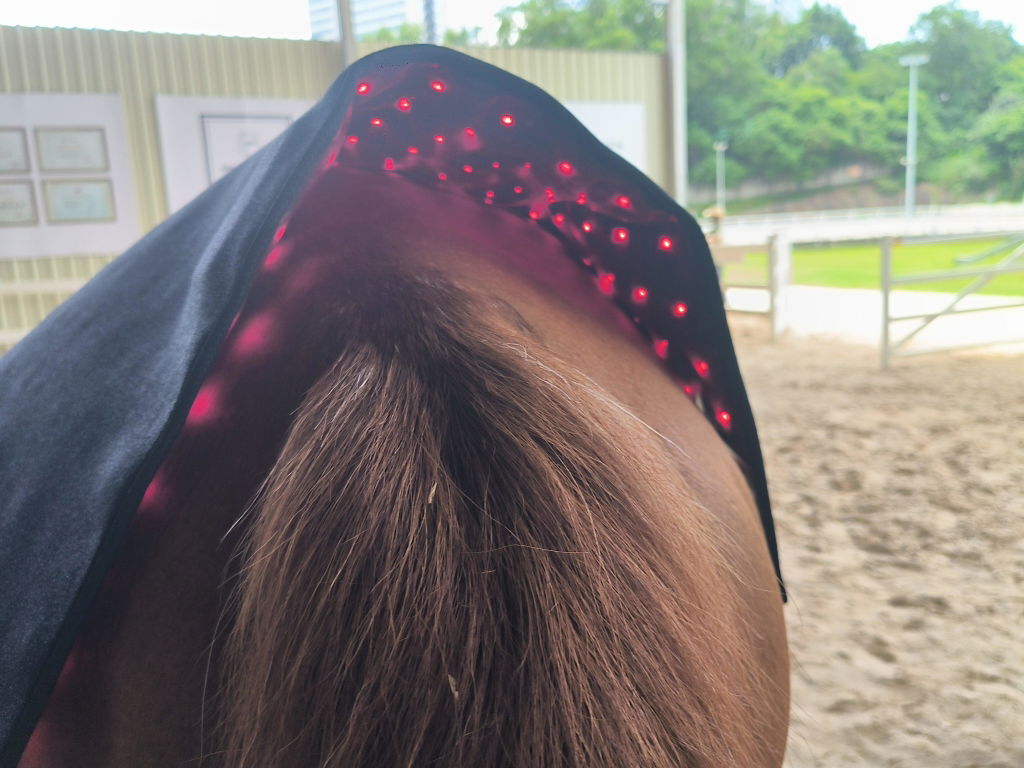
- Match the format to the area: Use a device format (handheld, pad, wrap, or blanket) that maintains good contact with the area you're treating, so the light actually reaches the tissue.
- Work with your veterinarian: For any condition, follow veterinary guidance on whether, when, and how to use red light therapy as part of the overall plan.
Get these factors right, and you maximize the likelihood of a positive result. For owners ready to explore quality equipment, the PbmEquine red light therapy for horses collection offers dual-wavelength, equine-specific devices designed to deliver effective treatment. The same principles apply to other animals too — PbmEquine offers a dedicated red light therapy collection for dogs and cats for owners treating smaller companions.
Conclusion: Effective, with Realistic Expectations
So, is red light therapy effective for horses? Based on current evidence, the fair answer is that it shows real promise as an effective complementary therapy. It's supported by a plausible mechanism — improving circulation, supporting collagen production, modulating inflammation, and aiding tissue repair — and a growing body of research, and it's widely used in equine care for tissue repair, muscle recovery, pain and inflammation, joints, and more.
The honest caveats matter too: the evidence is still developing, results can vary by condition, and standardized protocols are still being established. Red light therapy is not a guaranteed cure, and it works best as a supportive therapy — applied consistently, with a quality device, and within a veterinary-guided plan.
Approached with realistic expectations and used correctly, red light therapy can be a genuinely valuable, evidence-supported part of your horse's care. The key is to treat it as what it is: an effective complement to good horsemanship and professional veterinary care, not a replacement for either. Used that way, it earns its growing place in modern equine wellness.
Frequently Asked Questions
Is red light therapy effective for horses?
It shows promise as an effective complementary therapy, though it's not a cure-all and the evidence is still developing. It's supported by a plausible mechanism and growing research, and is widely used in equine care for tissue repair, pain and inflammation, and muscle recovery. Results can vary by condition, and standardized protocols are still being established. The accurate answer: it can be an effective supportive tool when used consistently and appropriately, within veterinary-guided care rather than as a standalone replacement.
How does red light therapy work on horses?
Through photobiomodulation. Red (around 660nm) and near-infrared (around 850nm) light is absorbed by mitochondria, which is thought to boost cellular energy (ATP). This may support increased circulation, collagen production, modulation of inflammation, and tissue repair. Because effects depend on light reaching the target tissue, delivering the correct wavelengths at adequate power is essential — which is why device quality and proper use matter so much for results.
What does the research say?
It's promising but still developing. A 2019 review called photobiomodulation a promising adjunctive treatment for equine tendon and ligament injuries, and studies report benefits for tissue repair, pain, and inflammation. But researchers note the evidence is still growing, results aren't always consistent, and protocols aren't fully standardized — some studies even found limited effect for certain uses. The honest summary: real promise as a complementary therapy, but not a proven standalone cure.
How long does it take to show results?
It's not instant — it works gradually through cumulative effects over time. Consistent, repeated treatment is necessary, and results typically develop over a course of regular sessions rather than after a single use. The timeframe depends on the condition, its severity, the device and protocol, and the individual horse. Approach it with realistic expectations as a supportive therapy applied consistently, and follow veterinary guidance on the schedule for your horse's situation.
Does it replace veterinary care?
No. It's a complementary therapy meant to be used alongside professional veterinary diagnosis and treatment, not instead of it. For any injury, illness, or concern, a veterinarian should diagnose the condition and direct the plan, within which red light therapy may be a supportive element. Using it as a substitute could delay proper treatment and worsen the outcome. Involve your veterinarian and use red light therapy as one supportive part of a professionally directed care plan.