Skip to product information
1 of 5

Red Light Therapy Pad for Horses' Back--pbmequine

Red Light Therapy Pad for Horses' Back--pbmequine

Regular price $450.00 USD
Regular price Sale price $450.00 USD
Sale Sold out
Shipping calculated at checkout.
Quantity


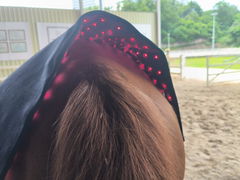
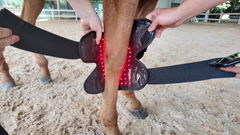
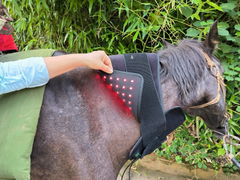
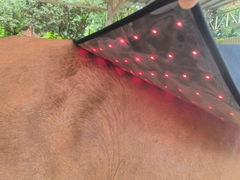
Red light therapy for horses' back, purpose-sized and hands-free. This XL equine back pad wraps the back and loin in 720 LED chips across two clinically relevant wavelengths — 660nm visible red for surface tissue and 850nm near-infrared for deeper structures — then shuts itself off after a timed 15-minute session.

Built for the barn, not the lab bench: flexible enough to follow the contour of the back, secured by a single elastic barrel strap, and operated by one button.

720LED CHIPS
660nmVISIBLE RED
850nmNEAR-INFRARED
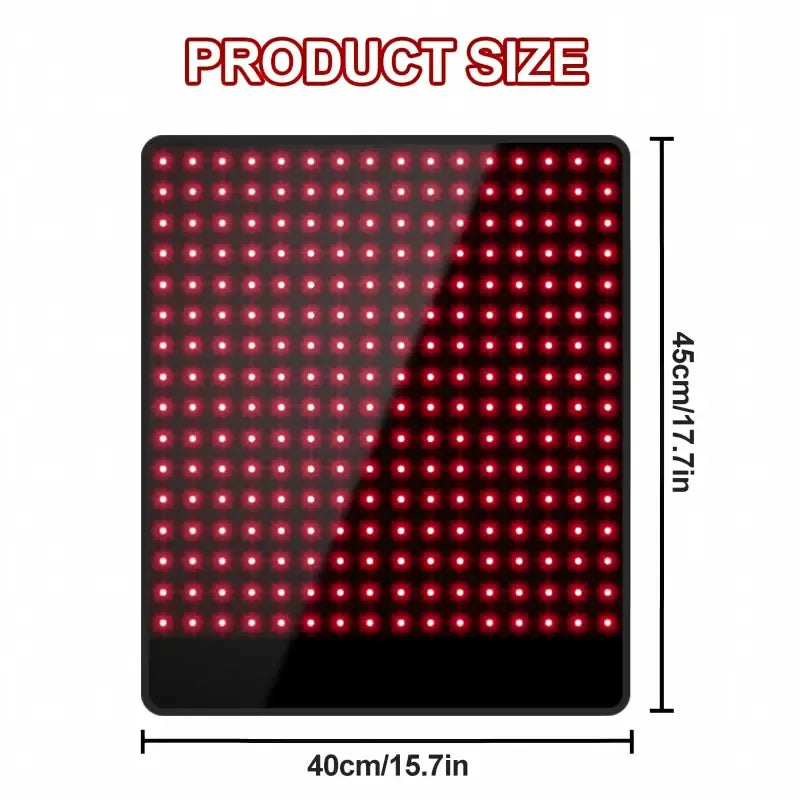
18×16"COVERAGE
15minAUTO TIMER

Why a Horse's Back Needs Its Own Pad

The equine back is a large, muscular, curved surface — and it is nothing like a leg. A boot or a small spot device simply cannot deliver light evenly across the topline and loin, and holding a handheld torch over that much area is neither practical nor consistent.

That is the reasoning behind a dedicated back pad. Three things have to be right at once:

  • Enough area. Covering a meaningful span of the back in a single placement, rather than treating a hand-sized patch at a time.
  • Contact that follows the contour. Light works best in close, even contact with the body; a rigid panel bridges over the curve of the back and wastes output into the air.
  • Hands-free security. Fifteen minutes is a long time to stand and hold something on a horse — and a horse that shifts will unseat anything that isn't strapped.

This pad is designed around those three constraints specifically for the back and loin.

Two Wavelengths, Two Depths — Why Both Matter

Not all red light is the same, and the horse's back is not a single-depth target. It has surface tissue and skin at the top, and substantial muscle underneath. A pad that only emits one wavelength addresses only one of those.

Visible Red

660nm · 240 chips

The light you can see glowing through the pad. Red light at 660nm is absorbed more readily at and near the surface, making it the relevant wavelength for skin and superficial tissue across the topline.

Near-Infrared

850nm · 480 chips

Invisible to the eye — you will not see it, but it is working. Near-infrared at 850nm penetrates further than red light, reaching the deeper structures beneath the surface, such as the back's muscle mass.

Running 240 LEDs carrying 720 chips in total — 240 red and 480 near-infrared — means both depths are covered in the same 15-minute session, over the same area, without repositioning the pad or swapping devices.

What the Pad Is Designed to Do

Being precise about this matters more than making big promises. Devices of this class are intended to provide:

  • Temporary relief of minor muscle pain and minor joint pain
  • Temporary increase in local blood circulation
  • Temporary relaxation of muscles

In practice, owners and yards typically reach for a back pad in three situations: after work, as part of a post-exercise routine; before work, as part of a warm-up routine; and as ongoing maintenance for a horse in regular training, where the back takes consistent load.

What it is not: this pad is not a cure, not a diagnostic tool, and not a substitute for veterinary care. It is not intended to diagnose, treat, cure, or prevent any disease. Back signs in horses — soreness, resistance, a change in the way your horse goes — have many possible causes, and the honest, correct first step is always a veterinary examination.

Built for the Barn: Design Details That Matter

  • Flexible, conforming body. The pad bends with the shape of the back and loin, so the LED surface stays against the horse rather than tenting over the curve.
  • Single elastic barrel strap. One strap passes under the barrel and holds the pad in position — no assistant required, and no holding it in place for the whole session.
  • One-button operation. A single power button on the outer face. No menus, no app, no settings to get wrong with cold hands in a winter barn.
  • Built-in 15-minute timer. The pad switches itself off at the end of the recommended session, so you can't accidentally over-run a treatment while you're doing something else.
  • Large 18" × 16" footprint. 45cm × 40cm of LED surface covers a useful span of back in one placement — and the same pad can be repositioned to the legs when you need it there.

How to Use It on Your Horse's Back

1. Start with a clean, dry coat

Light has to reach the skin. Mud, caked sweat, and heavy dirt sit between the LEDs and the horse and simply block output — a quick groom first is the single easiest way to get the most out of every session.

2. Position the pad and strap it

Place the pad over the target area of the back or loin so it lies flat against the body, then run the elastic strap under the barrel and secure it. The pad should sit snug and in contact — not tented, not sliding.

3. Press the button — one 15-minute session

Press power and let the internal timer do the work. The recommended treatment time is 15 minutes with the pad wrapped in place, after which the pad shuts off automatically.

4. Repeat sensibly, then taper

Sessions can be repeated 2 to 3 times per day initially, then reduced to an as-needed basis. The pad ships with an easy-to-use manual covering the details.

Do not exceed 30 minutes in a single treatment. More is not better with light therapy. Follow the manual, keep sessions within the recommended window, and let your veterinarian guide frequency for any specific issue.

Specifications

Specification Detail
Coverage size 18" × 16" (45cm × 40cm)
LEDs 240 LEDs — 720 LED chips in total
Visible red 240 chips at 660nm
Near-infrared 480 chips at 850nm
Timer Internal timer — auto shut-off at 15 minutes
Maximum per treatment Do not exceed 30 minutes
Securing Elastic under-barrel strap, hands-free
Areas Back and loin; also usable on legs
Included Easy-to-use manual

Where This Fits in Your Horse's Care

The most useful thing we can tell you about red light therapy for a horse's back is where the line sits.

It belongs alongside good care — a properly fitting saddle, appropriate work, correct farriery, and veterinary attention when something changes. Used that way, as part of a routine or within a vet-guided plan, a back pad is a practical, low-effort tool you can run yourself, in your own yard, without booking anything.

It does not belong in front of a diagnosis. If your horse's back is sore, if performance has dropped, if there's resistance or lameness — that is a signal to call your vet, not a signal to reach for a device first. Back signs can stem from many different underlying causes, and using any therapy to make a horse feel more comfortable without knowing why can allow a real problem to progress quietly.

Important:  red light therapy products are intended to provide temporary relief of minor muscle pain, joint pain, and minor arthritis pain, muscle spasms, a temporary increase in local blood circulation, and temporary relaxation of muscles. These products are not intended to diagnose, cure, or prevent specific diseases or medical conditions.

The information on this page is educational and is not veterinary advice. Always consult your veterinarian regarding your horse's health, and follow their guidance for any diagnosed condition.

Fifteen Minutes. Two Wavelengths. Hands Free.

Red light therapy for horses' back doesn't need to be complicated — it needs enough coverage, both wavelengths, close contact, and a timer that stops you overdoing it. That's exactly what this pad is: strap it on, press the button, and let it run while you get on with the rest of your yard.

Frequently Asked Questions

How does red light therapy for a horse's back work?

This back pad delivers two wavelengths of light into the tissue at once: visible red light at 660nm, which is absorbed more at the surface, and invisible near-infrared light at 850nm, which reaches deeper structures. The pad carries 240 LEDs made up of 720 diode chips in total — 240 red (660nm) and 480 near-infrared (850nm) — held in close, even contact across the horse's back. Devices of this type are intended to provide temporary relief of minor muscle and joint pain, a temporary increase in local blood circulation, and temporary relaxation of muscles. Red light therapy is a supportive, complementary measure used alongside proper veterinary and management care — it is not a cure and is not intended to diagnose, treat, or prevent any disease.

What size is the horse back pad and does it fit all horses?

The pad measures 18 inches by 16 inches (45cm × 40cm), which is sized to cover a meaningful area of the equine back rather than a small spot. It is flexible, so it conforms to the contour of the back and loin instead of sitting rigidly on top, and it is secured with an elastic strap that passes under the barrel so the pad stays in place hands-free. Because it is a pad rather than a fitted rug, it suits a wide range of horse sizes and can also be positioned on other areas such as the legs. For very large areas or full-body coverage you would need a larger blanket-style system, but for targeted back and loin work this size is designed to give useful coverage in one placement.

How long should you use a red light therapy pad on a horse's back?

The pad has a built-in timer that automatically switches it off after 15 minutes, which is the recommended session length when the pad is wrapped in place. Sessions can be repeated 2 to 3 times per day initially, then reduced to an as-needed basis. Importantly, you should not run the device for more than 30 minutes in any single treatment. The automatic shut-off is there so you don't have to watch the clock and so a session can't accidentally run long. Treatment times vary with what you are supporting, so follow the included manual and your veterinarian's guidance rather than assuming longer is better.

What are the wavelengths 660nm and 850nm for?

They do different jobs, which is why this pad uses both. 660nm is visible red light — you can see it glowing — and it is absorbed more readily at and near the surface, making it relevant for skin and superficial tissue. 850nm is near-infrared light, which is invisible to the eye and penetrates further, so it reaches deeper structures beneath the surface such as muscle. The horse's back has both surface tissue and deeper muscle, so a pad carrying both wavelengths covers both depths in a single session. In this pad the ratio is 240 red chips at 660nm and 480 near-infrared chips at 850nm across 240 LEDs, for 720 chips in total.

Can I use this red light pad on my horse's back without a vet?

Red light therapy is a supportive tool, not a diagnostic or curative one, so it should sit alongside veterinary care rather than replace it. If your horse is showing back soreness, a change in performance, resistance under saddle, or any lameness, the right first step is a veterinary examination to find out what is actually going on — back signs can have many different causes, and some need specific treatment. Once your vet has assessed your horse and agrees it is appropriate, a pad like this can be used as complementary support within their plan. What it should never do is mask signs or delay a diagnosis. For routine use on a sound horse, it can also be used for general maintenance and post-exercise recovery support as part of your normal routine.

View full details

Red Light Therapy FAQ

What is Red Light Therapy?

Red Light Therapy works by delivering specific wavelengths of red and near-infrared light through the skin to activate the body’s natural healing and regeneration processes.

When applied at optimal wavelengths and energy levels, this light helps protect cells from nitric oxide interference. Under stress or illness, excess nitric oxide can block the production of ATP—the energy source your cells need to function properly. Red and near-infrared light reduce this interference, allowing cells to use oxygen more efficiently and continue producing energy.

By reaching deep into the cell’s mitochondria, red light therapy directly stimulates cellular repair and regeneration. The result is improved appearance, enhanced performance, and better overall well-being.

The benefits of Red Light Therapy?

Because of the way it energizes the cells, red light can help with a number of health conditions in animals, including the following:​

  • Joint Discomfort
  • Osteoarthritis
  • Inflammation 
  • Muscle soreness
  • Wounds and scars
  • Infections and viruses 
  • Tendon and ligament injuries
  • Exercise & overexertion recovery
  • Pre and post-performance recovery

How does red light therapy work?

In short, light therapy works by improving cellular function. All living organisms rely on light to produce energy. Inside each cell, mitochondria absorb specific wavelengths of light—naturally from the sun—and convert them into adenosine triphosphate (ATP), the fuel that powers the body.

Light therapy supplements natural sunlight by delivering concentrated, therapeutic wavelengths directly to the body. When cells receive a consistent supply of this beneficial light, they are able to produce energy more efficiently, helping the body function at a higher level.

Red wavelength light therapy, in particular, has been shown to improve blood circulation, reduce pain, and support the body’s inflammatory response. Over time, this can lead to noticeable benefits such as healthier skin, better sleep, increased energy, faster recovery, and improved overall performance.

How Often Do I Need to Use Red Light Therapy Equipment?

Usage frequency depends on the condition being treated and the specific device being used. For many situations, an initial period of more frequent use is recommended to support early recovery.

In general:

  • Many users begin with daily sessions for the first two weeks
  • This is typically followed by a maintenance schedule of once or twice per week

For best results, always follow the usage instructions provided with your device, as well as any guidance from your veterinarian or healthcare professional. Consistency is key—maintaining a regular routine helps support the body’s natural recovery and regenerative processes.

How to use red light therapy equipment?

  • Use two 15-minute sessions per day on onetarget areafor optimal results.
  • If needed, repeat thesessionon another area.
  • Continue regular use until results are visible; most users see improvement within about two weeks.
  • Do not use the device while the horse is in motion, as movement and pressure may cause the LED to disconnect from the power source.
  • Do not fold the red light therapy wrap, as this may damage the LED connection. Simply place it gently on your horse’s body during treatment.

Does Red Light Therapy Work on Open Wounds?

Yes, red light therapy can be used to support the healing of minor open wounds. It has been widely recognized as a safe and natural method to help accelerate the healing process by supporting circulation and cellular repair.

Red light therapy is commonly used to assist with:

  • Minor cuts and abrasions
  • Burns
  • Post-surgical incisions
  • Scar recovery

That said, wounds that require medical attention should always be evaluated by a qualified medical professional or veterinarian. Red light therapy should be viewed as a supportive or complementary approach, not a replacement for necessary medical care.

What should I be aware of when using red light therapy?

For safe and effective use, please note the following:

  • Use professional, veterinarian-recognized devices with appropriate wavelength and power
  • Follow our recommended usage frequency and guidelines
  • Avoid direct exposure to the eyes and thyroid area

Do not use red light therapy:

  • Over tumors or suspected tumor areas
  • On pregnant mares

If your horse has a medical condition or you are unsure about proper use, consult your veterinarian before treatment.

Scientific References

  1. Inflammation Reduction: Lasers Med Sci. 2020;35(2):345-352.
  2. Tissue Repair: Journal of Orthopaedic Research. 2018;36(5):1423-1430.
  3. Wound Healing: Veterinary Surgery. 2019;48(3):521-529.
  4. Joint Mobility: Equine Veterinary Journal. 2021;53(4):789-796.
  5. FDA Safety: Guidance for Industry: Regulatory Classification of Low-Level Light Therapy Devices. 2022.